

What's Happening?
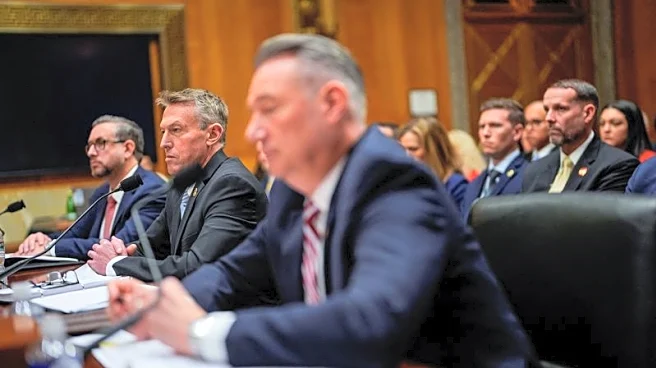
The U.S. Senate has failed to advance an effort to fund the Department of Homeland Security, marking the last unresolved issue in a prolonged federal budget stalemate. This development raises the possibility of a partial federal government shutdown. The impasse
in the Senate is part of a broader budgetary conflict that has persisted for months, affecting various government departments and agencies. The inability to secure funding for the Department of Homeland Security is particularly significant, as it plays a crucial role in national security and public safety. The failure to reach an agreement on this funding could lead to disruptions in the department's operations, impacting its ability to carry out essential functions.
Why It's Important?
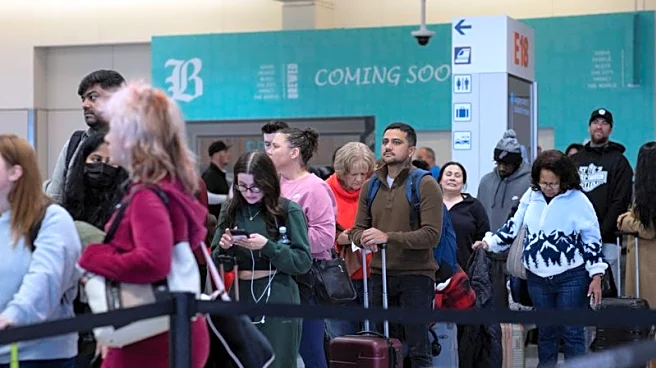
The looming partial government shutdown could have significant implications for U.S. national security and public services. The Department of Homeland Security is responsible for a wide range of critical functions, including border security, immigration enforcement, and emergency response. A shutdown could hinder these operations, potentially compromising national security and public safety. Additionally, a government shutdown can have broader economic impacts, affecting federal employees, contractors, and the services they provide. The uncertainty surrounding the budget negotiations may also undermine public confidence in government institutions and their ability to effectively manage national affairs.
What's Next?
If the Senate and other stakeholders do not reach a resolution soon, a partial government shutdown could commence, affecting various federal operations. Lawmakers may need to engage in further negotiations to find a compromise that addresses the funding needs of the Department of Homeland Security and other affected agencies. The situation may prompt increased pressure from political leaders, business groups, and civil society organizations to avoid a shutdown and ensure the continuity of government services. The outcome of these negotiations will be closely watched, as it will have significant implications for government operations and public trust.