

What's Happening?
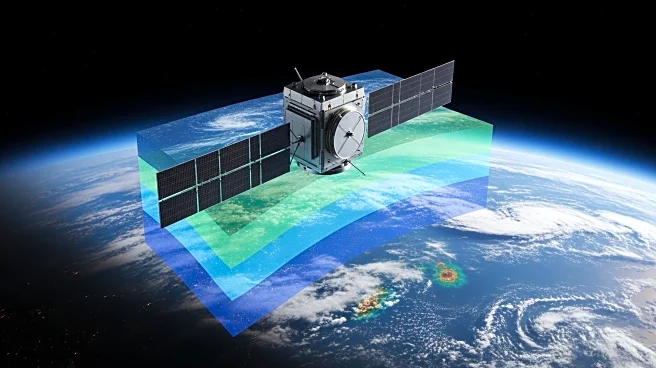
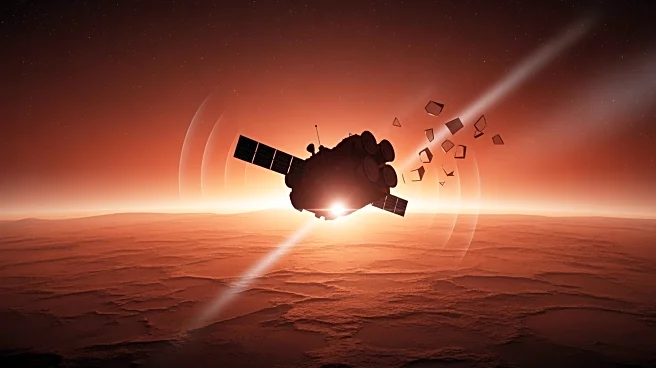
NASA has lost contact with the MAVEN Mars orbiter, a critical component of its Mars exploration program, as of December 6, 2025. The spacecraft, which has been in orbit since 2014, unexpectedly went silent after slipping behind Mars during a routine orbit.
Despite attempts to re-establish communication, the orbiter remains unresponsive. MAVEN, short for Mars Atmosphere and Volatile EvolutioN, has been instrumental in studying the Martian atmosphere and its interaction with solar winds, contributing significantly to our understanding of Mars' transformation from a potentially habitable planet to its current state. The loss of contact raises concerns about the health of the spacecraft and the resilience of NASA's aging Mars communications network, which is crucial for current and future missions, including the planned return of Martian rock samples to Earth.
Why It's Important?
The loss of MAVEN could have significant implications for NASA's Mars exploration efforts. As a key node in the interplanetary communication network, MAVEN plays a vital role in relaying data from Mars rovers like Curiosity and Perseverance back to Earth. Its absence could reduce the redundancy and data capacity of the network, potentially limiting the amount of scientific data that can be transmitted daily. This situation underscores the challenges faced by NASA's aging fleet of Mars orbiters, highlighting the need for new investments in Mars telecommunications infrastructure. The incident also emphasizes the importance of maintaining a robust relay network to support long-term missions such as the Mars Sample Return, which relies on reliable communication links.
What's Next?
NASA is actively working to re-establish contact with MAVEN by sweeping antennas across its expected position and transmitting commands in hopes of triggering a reset. If contact cannot be restored, NASA may need to adjust operations for current Mars missions, potentially rebalancing data transmission among other orbiters. The situation could accelerate plans for a next-generation Mars telecommunications orbiter, which has been under consideration for years. Coordination with international partners like the European Space Agency may also become more critical to ensure continued support for Mars exploration missions.
Beyond the Headlines
The MAVEN mission has already exceeded its expected lifespan, providing valuable data that has reshaped our understanding of Mars. Even if the spacecraft remains silent, its contributions to planetary science will continue to be analyzed for years. The incident highlights the broader issue of aging space infrastructure and the need for strategic planning to ensure the sustainability of long-term space exploration efforts. It also serves as a reminder of the inherent risks and challenges associated with operating spacecraft in distant and harsh environments like Mars.