




What's Happening?
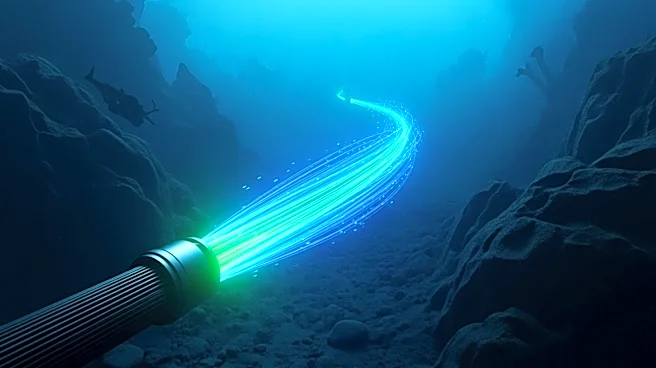
Iran has issued warnings about the vulnerability of submarine cables in the Strait of Hormuz, a critical point for the region's digital economy. These cables, which carry about 99% of the world's internet traffic, are essential for telecommunications
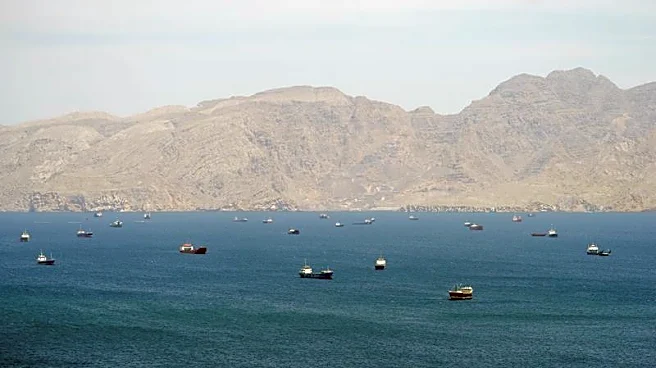
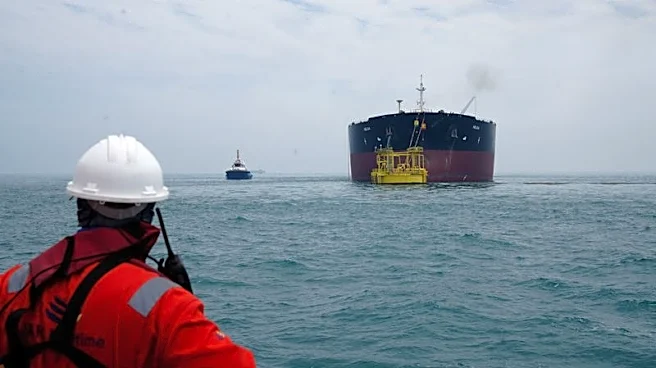
and electricity transmission between countries. The Strait of Hormuz is already a chokepoint for global oil shipments and is equally vital for digital connectivity. The potential threat to these cables has raised concerns about possible attacks on critical infrastructure, which could lead to internet slowdowns, e-commerce disruptions, and delayed financial transactions. The risks to these cables include state-sponsored sabotage, accidental human activities, undersea currents, earthquakes, and other natural phenomena.
Why It's Important?
The security of submarine cables is crucial for maintaining global internet connectivity and economic stability. Any disruption could have significant impacts on international communications, cloud services, and financial transactions. The Gulf region, particularly countries like the UAE and Saudi Arabia, heavily relies on these cables for their digital infrastructure, which supports their economic diversification efforts away from oil. The potential for damage to these cables in a conflict zone like the Strait of Hormuz underscores the need for robust protective measures and contingency plans to ensure uninterrupted service.
What's Next?
The ongoing conflict in the region poses a continuous threat to these critical infrastructures. Repairing damaged cables in conflict zones is challenging due to the risks involved and the need for permits to access territorial waters. The industry may need to explore alternative routes or technologies to mitigate these risks. Additionally, the development of satellite systems as a backup is not currently feasible due to their limited capacity and higher costs compared to submarine cables.