



What's Happening?
A recent study has uncovered a significant connection between gut immune responses and neuroinflammation in multiple sclerosis (MS). Researchers from Keio University in Japan, led by Dr. Shohei Suzuki and Dr. Tomohisa Sujino, have identified that inflammatory
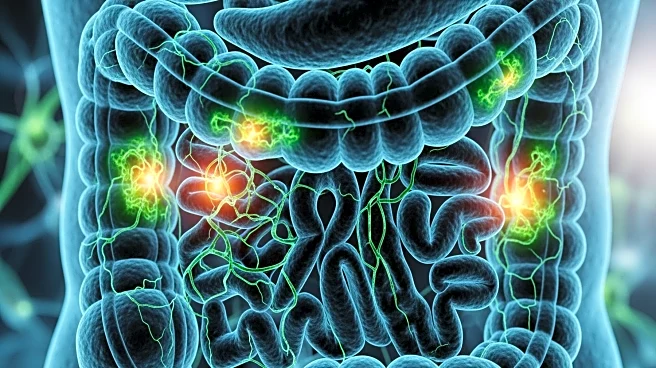
Th17 cells accumulate in the gut of both MS patients and experimental models. This suggests a conserved gut-CNS axis that may be active in human diseases. The study found that intestinal epithelial cells (IECs) upregulate antigen presentation pathways, particularly in the ileum, which leads to the generation of pathogenic Th17 cells. These cells then migrate to the central nervous system, contributing to neuroinflammation. The findings highlight the potential role of gut microbiota in neurological diseases and suggest new therapeutic approaches targeting the gut.
Why It's Important?
The study's findings are crucial as they provide a new perspective on the treatment of multiple sclerosis, a debilitating neurological disorder. By identifying the gut as a critical site for immune activation, the research opens up possibilities for novel therapeutic strategies that focus on modulating the intestinal microbiota or the antigen-presenting activity of IECs. This could lead to more effective treatments for MS and potentially other autoimmune neurological diseases. The research also underscores the importance of understanding the gut-brain connection, which could have broader implications for other neurological conditions influenced by gut microbiota.
What's Next?
Future research is likely to focus on developing targeted therapies that modulate the gut microbiota or the antigen-presenting functions of IECs. Clinical trials may be conducted to test the efficacy of these new treatments in reducing neuroinflammation and disease severity in MS patients. Additionally, further studies could explore the gut-CNS axis in other neurological diseases, potentially leading to breakthroughs in understanding and treating conditions like Parkinson's and Alzheimer's disease.