







What's Happening?
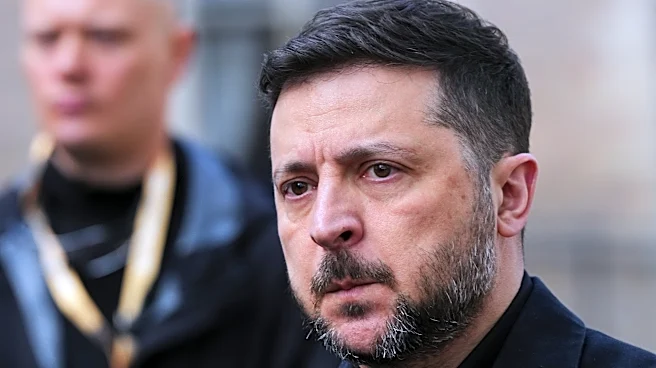
The European Union has approved a $105 billion loan to Ukraine, aimed at supporting the country amidst its ongoing conflict with Russia. This financial package is designed to cover two-thirds of Ukraine's needs over the next two years. The loan's approval
comes after a delay caused by a veto from Hungary, which has since been lifted following a political shift in the country. Ukrainian President Volodymyr Zelensky, attending an EU summit in Cyprus, emphasized the importance of this financial support in strengthening Ukraine's military and fulfilling social obligations. The loan will be disbursed in two parts, with half available this year and the remainder in 2027. A significant portion of the funds is allocated for military spending, while the rest will support general budget needs, including health and education.
Why It's Important?
This financial aid is crucial for Ukraine as it continues to face economic challenges due to the ongoing war with Russia. The loan provides a lifeline, preventing potential cuts to public services and ensuring the country can maintain its defense capabilities. The EU's decision to approve the loan also signifies a strong political statement of support for Ukraine, reinforcing the bloc's commitment to countering Russian aggression. The financial package is expected to bolster Ukraine's resilience and stability, which is vital for the broader geopolitical balance in the region. Additionally, the loan's approval may influence other international actors to increase their support for Ukraine.
What's Next?
Following the loan approval, Ukraine will focus on utilizing the funds to enhance its military capabilities and support its civilian infrastructure. The EU and Ukraine are also expected to continue discussions on further sanctions against Russia, aiming to increase pressure on Moscow. The disbursement of the loan will be closely monitored, and Ukraine may seek additional financial support if the conflict persists. The international community will likely watch the situation closely, as the outcome could have significant implications for regional security and international relations.