

What's Happening?
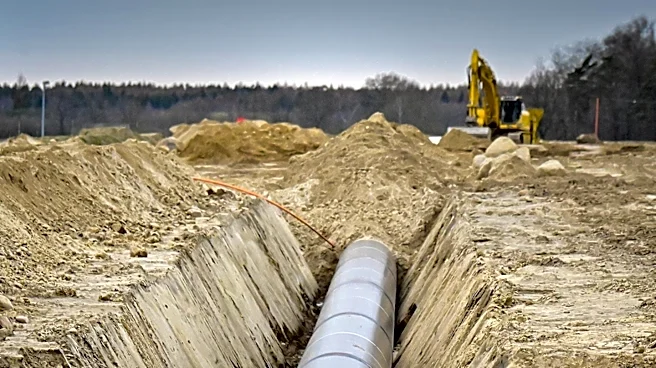
Congressman John Joyce, M.D. announced on November 13, 2026, that $1 million in funds has been awarded to the Fairfield Municipal Authority for sanitary sewer rehabilitation in Adams County. This funding addresses the urgent need to replace aging and
critical infrastructure to ensure the health and safety of the community. According to Congressman Joyce, conversations with members of the Fairfield Municipal Authority Board highlighted the critical state of the existing sewer system. Patricia Smith, Secretary and Treasurer of the Fairfield Municipal Authority, expressed gratitude for Congressman Joyce's support, noting that over 60% of the community's households are low-to-moderate income, and local businesses cannot generate sufficient funds for such extensive replacement projects. The appropriation is expected to significantly aid in replacing a substantial section of the deteriorating infrastructure.
Why It's Important?
This funding is crucial for the Fairfield community, particularly given its demographic makeup where a majority of households are low-to-moderate income. The inability of the local authority and businesses to independently finance such a large-scale infrastructure project underscores the importance of federal appropriations in supporting essential public services in underserved areas. The replacement of aging sanitary sewer systems is vital for public health, preventing contamination, and ensuring environmental safety. Failure to address such infrastructure issues can lead to significant health risks, environmental damage, and costly emergency repairs in the future. This investment not only improves current living conditions but also safeguards the community's long-term well-being and economic stability by providing reliable public utilities.
What's Next?
The Fairfield Municipal Authority will proceed with the sanitary sewer rehabilitation project, utilizing the $1 million in secured funds. The immediate next steps will likely involve detailed planning, procurement processes, and the commencement of construction to replace the aging infrastructure. This project is expected to alleviate the current strain on the community's sewer system and improve overall public health and safety. The successful implementation of this project could also serve as a model for other communities facing similar infrastructure challenges, potentially encouraging further federal or state-level support for critical infrastructure upgrades in areas with limited local funding capabilities.
Beyond the Headlines
The allocation of federal funds for local infrastructure projects like this highlights a broader national challenge concerning aging infrastructure across the United States. Many smaller, less affluent communities struggle to maintain and upgrade essential services without external financial assistance. This situation often creates a 'Catch 22,' where the need for replacement is dire, but the financial resources are scarce. Such appropriations underscore the role of federal government in addressing disparities in infrastructure quality and access, particularly in communities that lack the tax base or economic activity to fund major capital improvements. It also brings to light the ongoing debate about federal responsibility versus local autonomy in managing critical public utilities.