






What's Happening?
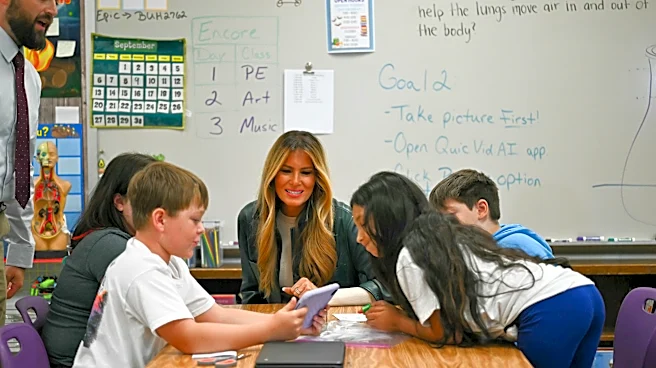
The University at Buffalo recently hosted nearly 30 high school students for the National Summer Transportation Institute (NSTI), an initiative designed to introduce them to career and educational opportunities within the transportation industry. Sponsored
by the Stephen Still Institute for Sustainable Transportation and Logistics (ISTL), the program offered a comprehensive curriculum including lectures, hands-on design competitions, field trips, and laboratory tours. Key topics covered multi-modal transportation systems, infrastructure, traffic operations and control, traffic simulations, bridge engineering, and emerging technologies like artificial intelligence and machine learning. Students visited the Transportation Research and Visualization Laboratory (TRAVL), where they learned about self-driving vehicles and the ethical considerations of 'moral machine' decision-making, as well as the science behind various simulators.
Why It's Important?
This program is crucial for addressing the future workforce needs of the U.S. transportation sector. By exposing high school students to the diverse and evolving aspects of transportation engineering and logistics, it helps cultivate interest in STEM fields and prepares a pipeline of talent for critical infrastructure development. The focus on emerging technologies like AI and machine learning ensures that future professionals will be equipped to handle the complexities of modern transportation systems, from smart cities to autonomous vehicles. Investing in early education and engagement in these areas is vital for maintaining U.S. competitiveness in global innovation and ensuring the sustainability and efficiency of national transportation networks. It also promotes diversity within engineering fields by reaching students at an impressionable age.
What's Next?
Following the success of programs like NSTI, there is potential for increased collaboration between academic institutions, government agencies, and industry partners to expand similar initiatives nationwide. This could involve developing more advanced curricula, offering internships, and creating mentorship opportunities for students interested in transportation careers. Universities may also integrate feedback from these programs into their undergraduate and graduate studies to better align with industry demands. The continued emphasis on emerging technologies suggests that future programs will likely incorporate more hands-on experience with AI, data analytics, and sustainable transportation solutions. The long-term goal is to foster a generation of innovators and problem-solvers who can address the complex challenges facing the U.S. transportation infrastructure.
Beyond the Headlines
The deeper implications of programs like NSTI extend to shaping public perception and policy regarding transportation. By engaging young minds, these initiatives can foster a greater understanding of the importance of sustainable and efficient transportation systems, potentially leading to more informed citizens and future policymakers. The exposure to ethical considerations in AI, such as 'moral machine' decision-making in self-driving cars, encourages critical thinking about the societal impact of technology. This early education can contribute to a more ethically conscious and socially responsible approach to technological development in transportation. Ultimately, by inspiring the next generation, these programs help ensure that the U.S. remains at the forefront of transportation innovation, addressing not only technical challenges but also the broader societal and environmental responsibilities associated with mobility.