

What's Happening?
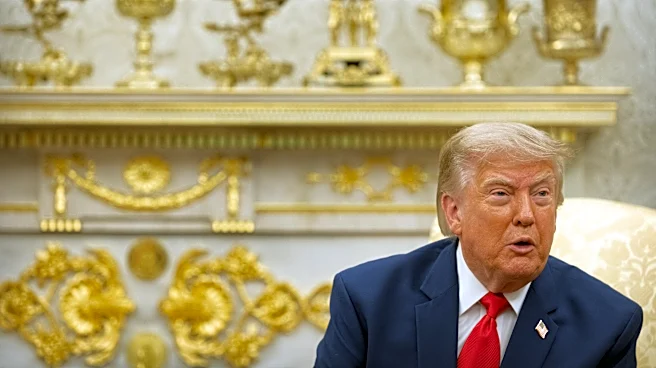
The Trump administration has set a new record for the number of ultra-wealthy officials appointed to the White House, with 57 individuals possessing fortunes of at least $100 million. This figure is more than four times the combined total of the three
preceding presidential administrations. Among these appointments are 17 ambassadors and 40 high-ranking executive branch officials. Notable examples include Commerce Secretary Howard Lutnick and Education Secretary Linda McMahon, both billionaires. President Trump, himself a billionaire, has publicly justified his preference for appointing wealthy individuals, citing their financial success as an indicator of executive prowess and negotiation skills. This trend is highlighted in a report by the consumer advocacy group Public Citizen, which details the significant increase in affluent appointees compared to previous administrations, such as George W. Bush and Joe Biden, who each had five such members, and Barack Obama, who had three.
Why It's Important?
The unprecedented concentration of ultra-wealthy individuals in high-level government positions raises significant concerns about potential conflicts of interest and the perception of 'crony capitalism.' Critics argue that when government leaders predominantly come from the ranks of the ultra-rich, it creates perverse incentives and raises questions about whose interests are truly being served. This could lead to policies that disproportionately benefit the wealthy, such as tax cuts and reduced regulatory burdens for large investments, as observed during President Trump's first year back in the White House. While President Trump's base includes middle and working-class Americans drawn by promises of reducing daily costs, the economic approval of his administration has declined, with only 32% of U.S. adults approving his economic management last month. This disparity between the administration's composition and the economic concerns of the general populace could impact public trust and political outcomes in upcoming elections.
What's Next?
The continued presence of a large number of ultra-wealthy officials in the Trump administration will likely fuel ongoing debates about economic inequality and the influence of money in politics. As the administration continues to pursue policies related to artificial intelligence and financial regulation, there will be increased scrutiny over whether these initiatives primarily benefit the wealthy or serve broader public interests. The upcoming midterm elections will provide a crucial test of public sentiment regarding the administration's economic policies and its composition. The Republican Party faces challenges in maintaining its majorities in Congress, and the issue of wealth concentration in government could become a significant campaign point. Advocacy groups like Public Citizen will likely continue to monitor and report on the financial backgrounds of government appointees, pushing for greater transparency and accountability to ensure that public service is not unduly influenced by private wealth.
Beyond the Headlines
The phenomenon of ultra-wealthy individuals holding significant government positions has deeper implications for democratic governance and social equity. Beyond the immediate policy decisions, it can erode public confidence in the impartiality of government and foster a sense that the political system is rigged in favor of the elite. This can exacerbate feelings of disenfranchisement among ordinary citizens and contribute to political polarization. Historically, presidents have sought advice from the wealthy and appointed some to leadership roles, but the scale under the Trump administration is unprecedented. This trend challenges the ideal of a government 'of the people, by the people, for the people,' suggesting a shift towards a plutocratic model where financial success is equated with governing competence. The long-term cultural impact could be a normalization of extreme wealth in public office, potentially altering societal expectations of public servants and the very nature of political representation.