



What's Happening?
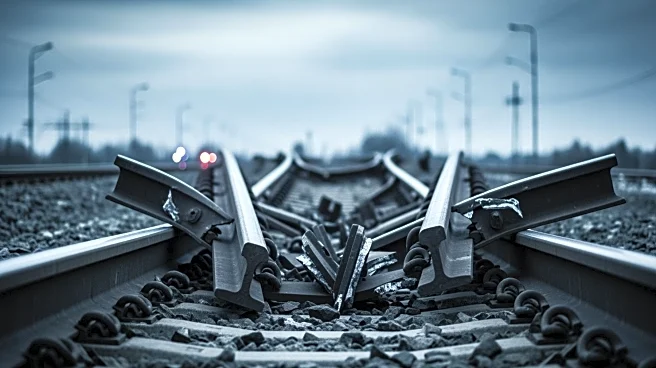
Spain has experienced its second major train crash within days, with a commuter train derailing near Gelida in Catalonia, resulting in the death of the driver and injuries to at least 37 people. The train struck a retaining wall that had fallen onto the tracks
due to heavy storms. This incident follows a high-speed train collision near Adamuz in Andalusia, which killed at least 42 people. The crashes have intensified scrutiny on Spain's rail safety, particularly as the high-speed rail network is generally seen as a model of efficiency and progress.
Why It's Important?
The back-to-back train crashes in Spain have raised urgent questions about the safety and reliability of the country's rail infrastructure. The high-speed collision in Andalusia, one of the deadliest in recent history, has dealt a blow to the reputation of Spain's rail system. These incidents highlight the need for improved infrastructure resilience and maintenance, especially in the face of severe weather conditions. The outcomes of the investigations could lead to significant policy changes and increased investment in rail safety, impacting the future of Spain's transportation network.
What's Next?
Following the crashes, Spain's Transport Ministry has suspended rail services between Madrid and Andalusian cities, with investigations expected to take about a month. Safety checks are being conducted across the Barcelona commuter network, potentially affecting around 400,000 commuters. Rail operators and authorities are set to meet to discuss the findings and implement necessary safety measures. The outcomes of these investigations could lead to significant changes in rail safety protocols and infrastructure maintenance practices to prevent future accidents.