


What's Happening?
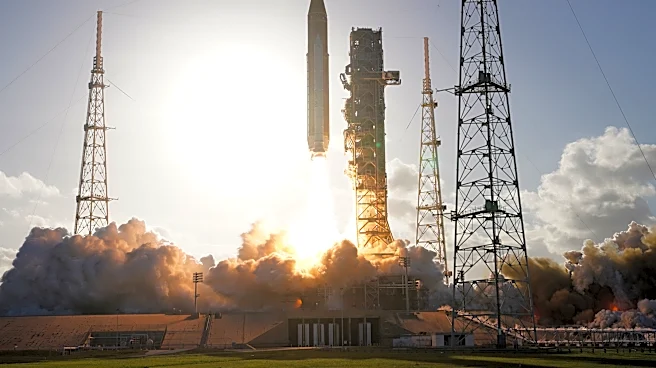
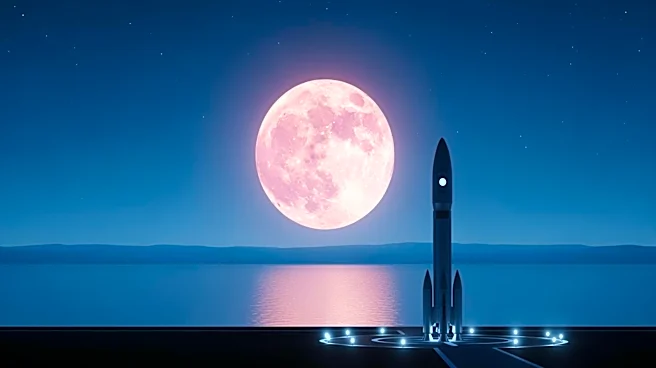
The April full moon, known as the Pink Moon, dazzled observers worldwide on April 1, 2026. This celestial event coincided with the launch of NASA's Artemis 2 mission, which sent four astronauts on a 10-day journey to the far side of the moon. The Pink Moon, named
after the ground-blooming plant phlox that flowers in early spring in North America, appeared fully illuminated as it rose opposite the sun. The event was marked by stunning photographs captured from various locations, including the Kennedy Space Center in Florida and the Empire State Building in New York. The Artemis 2 mission, featuring astronauts Reid Wiseman, Victor Glover, Christina Koch, and Jeremy Hansen, is a significant step in NASA's efforts to explore the moon and beyond.
Why It's Important?
The simultaneous occurrence of the Pink Moon and the Artemis 2 mission launch highlights the intersection of natural phenomena and human technological advancement. The Artemis 2 mission is a critical component of NASA's broader Artemis program, which aims to establish a sustainable human presence on the moon by the end of the decade. This mission serves as a precursor to future lunar exploration, potentially paving the way for human missions to Mars. The visibility of the Pink Moon also underscores the cultural and scientific significance of lunar events, drawing public attention to space exploration efforts. The successful launch and operation of Artemis 2 could bolster support for continued investment in space exploration and inspire future generations of scientists and engineers.
What's Next?
Following the launch, the Artemis 2 crew will spend 10 days in space, conducting various experiments and tests as they orbit the moon. This mission will provide valuable data on the effects of space travel on the human body, which is essential for planning longer missions to Mars and beyond. The success of Artemis 2 will likely influence the timeline and planning of subsequent Artemis missions, including Artemis 3, which aims to land astronauts on the lunar surface. Additionally, the public's interest in the Pink Moon and the Artemis mission may lead to increased engagement with space-related educational programs and initiatives.