







What's Happening?
U.S. Army researchers are developing adaptive camouflage technology, drawing inspiration from the Arctic fox's natural ability to change fur color with seasons. This initiative aims to enable military vehicles, equipment, and potentially soldiers to alter
their appearance to match diverse environments, thereby evading advanced surveillance systems. The research involves experimental coatings tested in Pituffik, Greenland, in collaboration with the Army Corps of Engineers’ Cold Regions Research and Engineering Laboratory (CRREL) and the Army Research Laboratory. This effort is part of a multinational research program, the International Cooperative Engagement Program for Polar Research, and the Office of Naval Research, highlighting the Arctic's increasing strategic importance. Unlike traditional camouflage, which uses fixed patterns, these adaptive systems would employ coatings or specialized fabrics that can be modified to suit different terrains, lighting conditions, and seasonal changes. Researchers are also considering surveillance technologies that operate beyond the visible spectrum, with CRREL’s cold regions artificial intelligence lead, Anthony Fragoso, noting the use of sensors to evaluate coating effectiveness. The goal is to create reversible and flexible concealment solutions for units operating in vastly different climates, from the Arctic to tropical jungles.
Why It's Important?
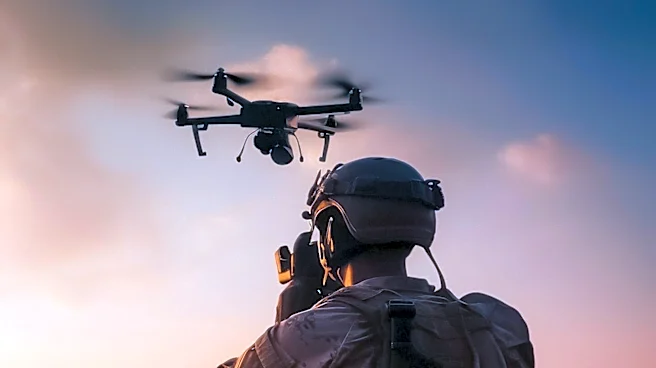
This development is crucial for enhancing the survivability and operational effectiveness of U.S. military forces in an evolving threat landscape. As surveillance technologies become more sophisticated, traditional camouflage methods are becoming less effective. Adaptive camouflage offers a significant tactical advantage by allowing forces to remain concealed from both human observers and increasingly prevalent automated sensors, such as drones. The ability to rapidly change concealment in varied environments, from snow-covered landscapes to dense vegetation, addresses a critical need for units like the Alaska-based 11th Airborne Division, which trains for both Arctic and Pacific operations. This technology could reduce the logistical burden of maintaining different camouflage patterns for various deployments and improve the element of surprise in combat scenarios. Furthermore, the research into AI-generated camouflage to confuse automated target-recognition systems indicates a dual-pronged approach to concealment and detection, pushing the boundaries of military technological superiority.
What's Next?
The adaptive camouflage project is currently in the research and development phase, with plans to transition to practical testing. The next stage will involve applying a rapidly deployable coating system to the Army’s cold weather all-terrain vehicles in Alaska. The Alaska National Guard is slated to participate by using helicopters equipped with thermal imaging cameras to assess the detectability of these vehicles from above. This testing will specifically evaluate effectiveness against unmanned aerial systems (UAS), a growing threat on modern battlefields. Researchers have not yet finalized a design, considering options such as removable coatings, specialized fabrics, or other materials that can provide multi-environment concealment. The objective is to develop adaptable concealment that offers a tactical advantage regardless of the operating environment, extending beyond just Arctic operations. The ongoing evaluation will determine the most effective and versatile solutions for future military applications.
Beyond the Headlines
The pursuit of adaptive camouflage reflects a broader strategic shift in military doctrine, moving towards dynamic and responsive defense mechanisms. This technology not only addresses immediate tactical needs but also signals a long-term investment in materials science and artificial intelligence for defense applications. The ethical implications of such advanced concealment could include debates around the nature of warfare, as the ability to become virtually undetectable might alter engagement rules and increase the complexity of identifying combatants. Legally, the deployment of such systems could prompt discussions on international arms control and the balance of power, particularly if adversaries develop similar capabilities. Culturally, the concept of 'invisibility' in warfare has long been a subject of fascination, and its realization could influence public perception of military capabilities. This development underscores a continuous arms race in perception and counter-perception, where the ability to see and not be seen remains a fundamental aspect of military dominance.