



What's Happening?
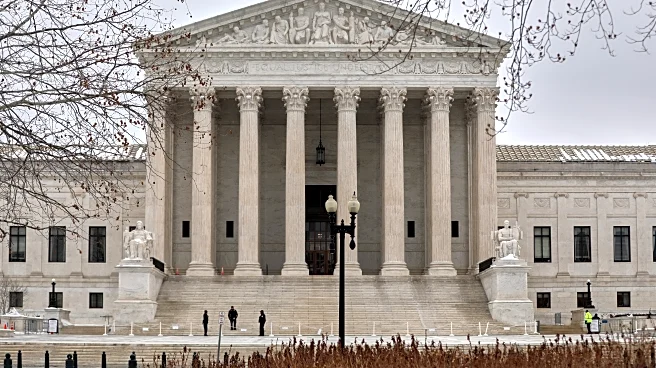
The U.S. Supreme Court has ruled against President Trump's authority to impose emergency tariffs under the International Emergency Economic Powers Act (IEEPA). This decision affects approximately half of the tariffs collected by the U.S. government, which
amounted to about $133.5 billion. The ruling has been met with positive reactions from international leaders, including those from Canada and the European Union, who hope it will lead to lower costs globally. The federal government may need to refund around $175 billion in tariffs collected without congressional authorization. President Trump expressed disappointment and announced plans to impose temporary tariffs to replace those overturned by the court.
Why It's Important?
The Supreme Court's decision has significant implications for U.S. trade policy and international relations. By striking down the tariffs, the court has set a precedent that limits the executive branch's power to unilaterally impose such economic measures. This ruling could lead to a reduction in trade tensions and lower costs for businesses and consumers. However, it also introduces uncertainty as businesses and trade partners await the administration's next steps. The decision may prompt a reevaluation of U.S. tariff policies, potentially leading to more stable and predictable trade relations.
What's Next?
Following the ruling, the U.S. government faces the challenge of refunding billions in tariffs and reassessing its trade strategy. President Trump's announcement of temporary tariffs suggests that the administration may seek alternative ways to maintain trade leverage. Internationally, trade partners will be closely monitoring the U.S.'s next moves, as the decision could influence ongoing and future trade negotiations. The ruling may also encourage other countries to challenge U.S. tariffs, potentially reshaping global trade dynamics.