
What's Happening?
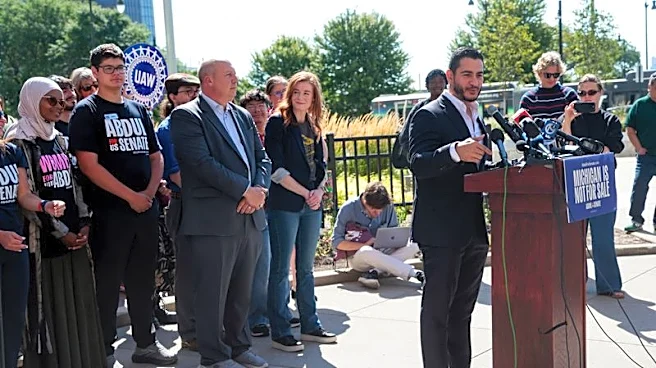
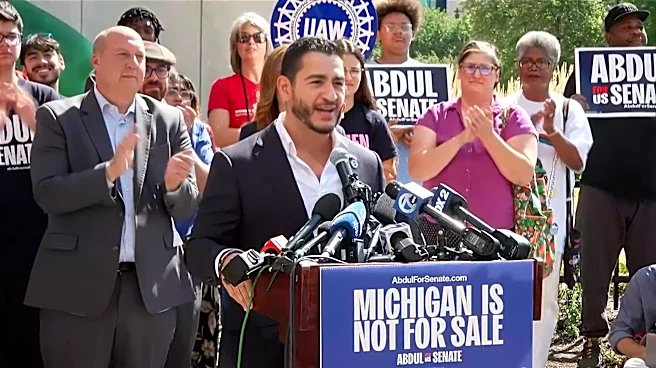
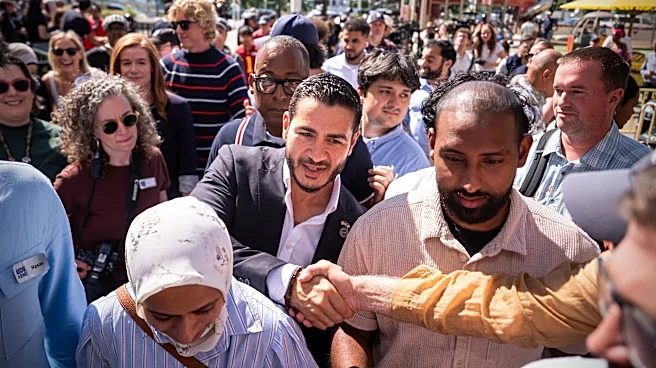
Rep. Haley Stevens, the Democratic leadership's preferred candidate for the U.S. Senate primary in Michigan, lost to progressive Abdul El-Sayed. This loss is seen as a reflection of the Democratic Party's
repeated strategic missteps, particularly its failure to adapt to the changing political landscape. Stevens' campaign was heavily supported by pro-Israel lobbying group AIPAC and corporate PACs, which may have alienated the party's more progressive base. The primary results have raised concerns about the party's ability to maintain control of Michigan's Senate seat and its broader electoral strategy.
Why It's Important?
The outcome of the Michigan primary underscores the growing divide within the Democratic Party between its centrist leadership and a more energized progressive base. This division could impact the party's ability to unify and effectively compete in upcoming elections. The loss also highlights the challenges faced by the Democratic establishment in appealing to a diverse electorate that increasingly demands candidates who reject corporate influence and embrace progressive policies. The party's ability to reconcile these differences will be crucial for its success in future elections.
What's Next?
The Democratic Party may need to reassess its candidate selection and campaign strategies to better align with the priorities of its base. This could involve supporting candidates who reject corporate PAC money and embrace progressive policies. The party's leadership will likely face pressure to address these internal divisions and develop a more cohesive strategy to appeal to a broader range of voters. The outcome of the Michigan primary may also influence the party's approach to other key races across the country.