





What's Happening?
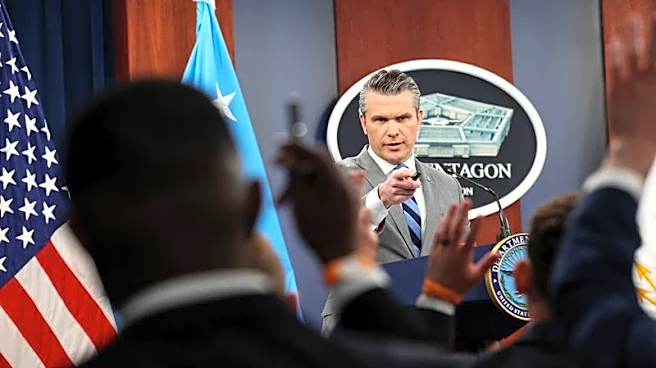
A federal appeals court appears ready to dismiss Defense Secretary Pete Hegseth's attempt to penalize Senator Mark Kelly for a video urging military personnel to refuse illegal orders. The video, released by Kelly and other Democratic lawmakers with military backgrounds,
did not specify which orders might be illegal but was published amid controversies over military actions and federalized National Guard deployments under President Trump's administration. The Pentagon's proposed actions against Kelly included reducing his military rank and issuing a censure letter, which Kelly challenged in court as unconstitutional retaliation. The court's panel, consisting of judges appointed by former Presidents Obama, Biden, and George H. W. Bush, expressed skepticism about the Pentagon's arguments.
Why It's Important?
The court's decision could have significant implications for the balance of power between military leadership and civilian oversight, particularly concerning the rights of retired military personnel to express dissent. If the court rules in favor of Kelly, it may set a precedent protecting military veterans from punitive actions for political speech. This case also highlights ongoing tensions between the Trump administration and Democratic lawmakers, especially those with military backgrounds, over the legality of certain military operations. The outcome could influence future interactions between the Pentagon and Congress regarding military conduct and the expression of political opinions by retired service members.
What's Next?
If the court rules against the Pentagon, it may prompt a reevaluation of policies regarding the treatment of retired military personnel who engage in political discourse. The decision could also lead to increased scrutiny of military orders and actions perceived as politically motivated. Additionally, the ruling might embolden other lawmakers and veterans to speak out against policies they view as unlawful without fear of retribution. The Pentagon may need to consider alternative approaches to addressing dissent within its ranks, potentially leading to broader discussions about military ethics and the role of civilian oversight.