



What's Happening?
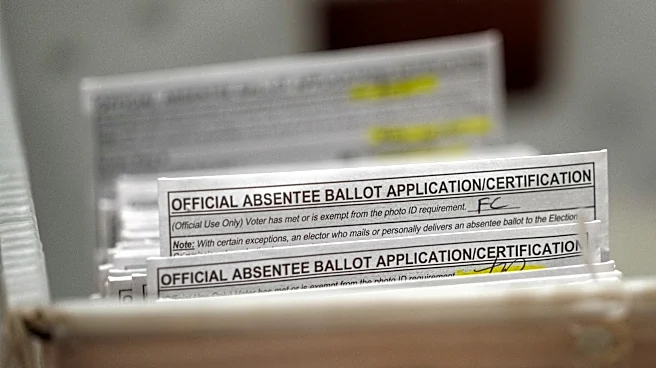
A Dane County Circuit Judge in Wisconsin has upheld a rule that prevents voters from requesting a new absentee ballot if their preferred candidate drops out of the race. This decision comes amid a tumultuous Democratic primary for governor, where several
candidates, including David Crowley and Sara Rodriguez, have exited and re-entered the race. The lawsuit challenging the rule was filed by Dane County voters with support from the state Democratic Party, arguing that the rule disenfranchises voters. The Wisconsin Elections Commission had issued guidance earlier this month reinforcing the rule, which was contested by Democratic commissioners Ann Jacobs and Mark Thomsen. The Republican National Committee supported the commission's guidance, emphasizing that allowing ballot changes would disrupt the election process.
Why It's Important?
The ruling has significant implications for absentee voting, a method increasingly used by voters. By upholding the rule, the court maintains the status quo, potentially affecting voter turnout and satisfaction, especially among those whose candidates have withdrawn. The decision underscores the ongoing debate over election integrity and voter rights, with Democrats arguing for more flexibility in voting processes and Republicans emphasizing the need for strict adherence to existing rules. This case highlights the challenges of managing elections in a dynamic political landscape, where candidate withdrawals can significantly impact voter preferences and election outcomes.
What's Next?
The decision may lead to further legal challenges or legislative efforts to address absentee voting rules in Wisconsin. As the Democratic primary continues, the ruling could influence voter engagement and strategy, particularly for candidates navigating a shifting field. The Wisconsin Elections Commission and political parties may need to consider additional guidance or reforms to balance election integrity with voter accessibility. The outcome of this case could also set a precedent for other states grappling with similar issues, potentially shaping national discussions on absentee voting and election laws.