


What's Happening?
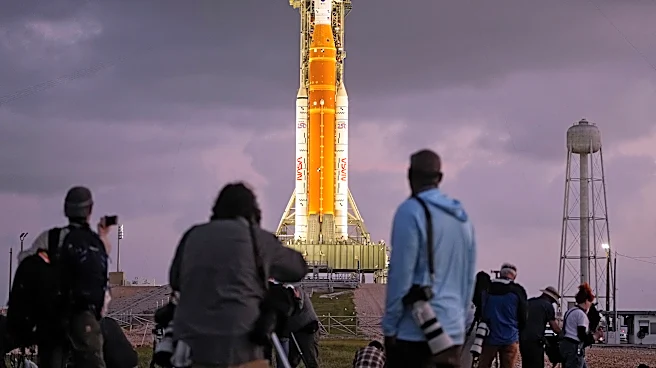
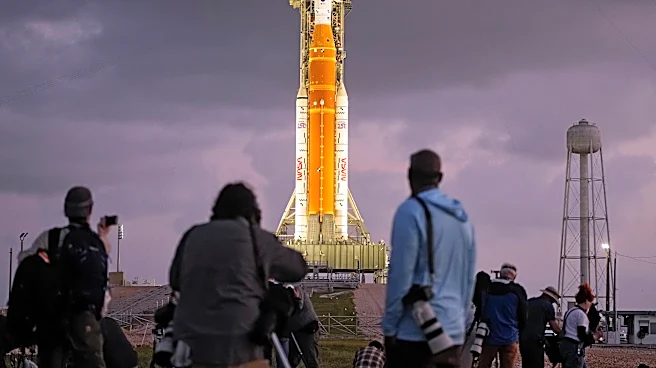
NASA is preparing for the launch of Artemis 2, a significant mission in space exploration, scheduled for April 1. This mission will be the first crewed journey around the Moon in over fifty years, marking a pivotal moment in NASA's Artemis program. The
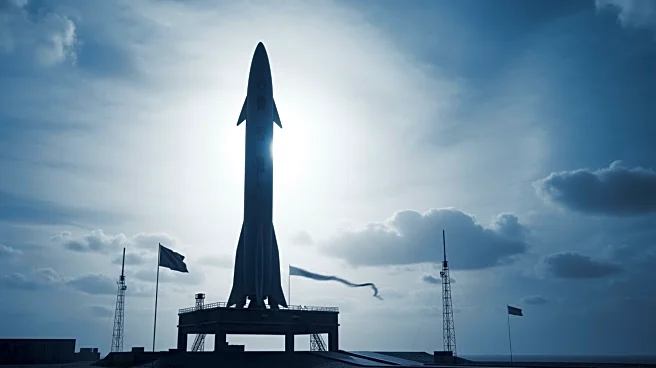
mission will launch from Kennedy Space Center in Florida using the Space Launch System (SLS) rocket. The crew, consisting of four astronauts, will orbit the Moon aboard the Orion spacecraft without landing, before returning to Earth. The mission aims to test critical systems for deep-space travel, setting the stage for future lunar landings and potential crewed missions to Mars. The crew includes Reid Wiseman, Victor Glover, Christina Koch, and Jeremy Hansen, each bringing unique experience and representing historic milestones.
Why It's Important?
The Artemis 2 mission is a crucial step in NASA's long-term goal of establishing a sustainable human presence on the Moon. By testing key systems required for deep-space travel, the mission paves the way for future lunar landings and potential crewed missions to Mars. This mission also represents significant milestones in diversity and international collaboration in space exploration. Christina Koch will be the first woman to travel to the Moon's vicinity, Victor Glover the first person of color, and Jeremy Hansen the first non-American astronaut on a lunar mission. The success of Artemis 2 could enhance international partnerships and inspire future generations in the fields of science, technology, engineering, and mathematics (STEM).
What's Next?
Following the Artemis 2 mission, NASA plans to continue its Artemis program with subsequent missions that will include lunar landings. These missions aim to establish a long-term human presence on the Moon, which is seen as a stepping stone for future crewed missions to Mars. The success of Artemis 2 will be critical in validating the technologies and systems needed for these ambitious goals. Additionally, the mission's outcomes could influence international space policy and collaboration, as well as inspire advancements in space technology and exploration strategies.