










What's Happening?
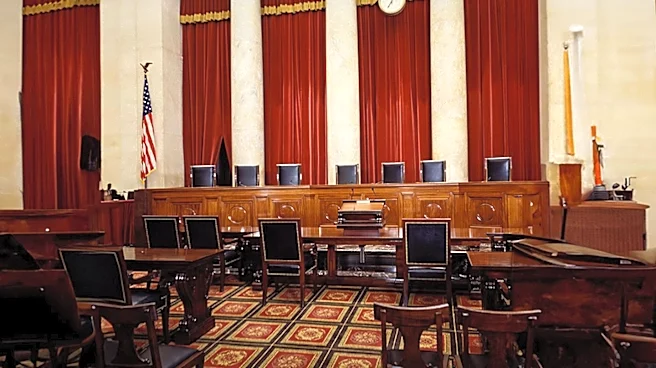
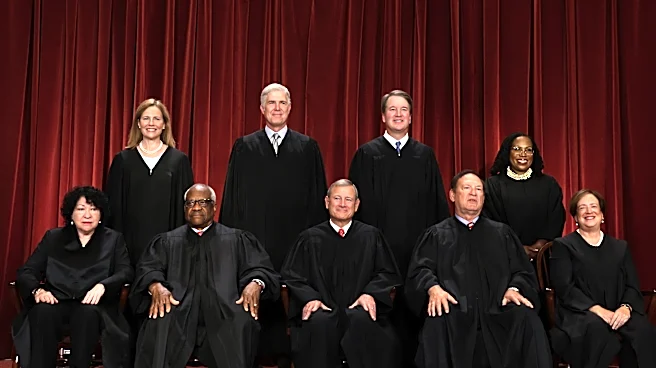
The U.S. Supreme Court has issued a significant ruling that curtails the ability of state courts to impose their own labeling requirements on products when federal standards are already in place. This decision came in a case involving Bayer, the company
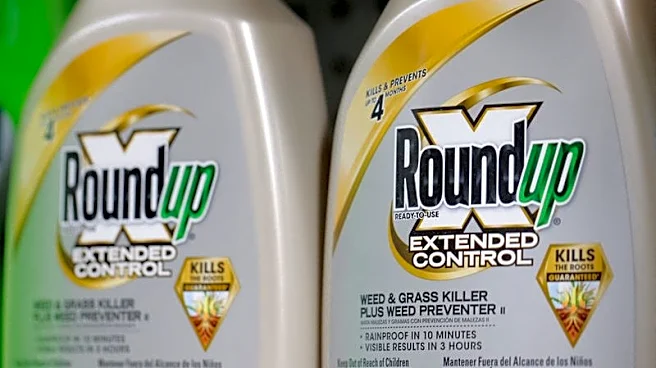
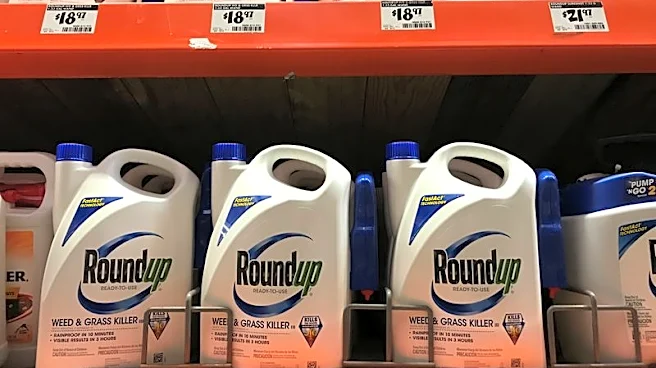
that acquired Monsanto, the maker of the herbicide Roundup. The lawsuit claimed that Roundup caused cancer in a Missouri man, and the company was ordered to pay $1.25 million for not including a cancer warning on its label. However, the Environmental Protection Agency (EPA) has consistently found no evidence that glyphosate, Roundup's active ingredient, causes cancer, and thus does not require such a warning. The Supreme Court's 7-2 decision reinforces the Federal Insecticide, Fungicide, and Rodenticide Act (FIFRA), which establishes a unified national labeling system to prevent a patchwork of state regulations.
Why It's Important?
This ruling is a major victory for Bayer and other companies facing similar lawsuits, as it effectively nullifies thousands of pending cases that could have resulted in substantial financial liabilities. The decision underscores the authority of federal agencies like the EPA in setting national standards, thereby limiting the scope of state-level legal actions that could disrupt uniform regulatory practices. For businesses, this ruling provides a clearer legal framework and reduces the risk of facing disparate state regulations. It also highlights the ongoing tension between federal oversight and state-level consumer protection efforts, particularly in cases involving alleged health risks from widely used products.
What's Next?
Following this ruling, it is likely that companies will face fewer lawsuits based on state-specific labeling requirements, potentially leading to a decrease in litigation costs. However, consumer advocacy groups and state governments may seek alternative legal avenues to address public health concerns, possibly pushing for changes in federal regulations or new legislative measures. The decision may also prompt a reevaluation of how scientific evidence is used in court cases, particularly in relation to claims of product safety and health risks.