





What's Happening?
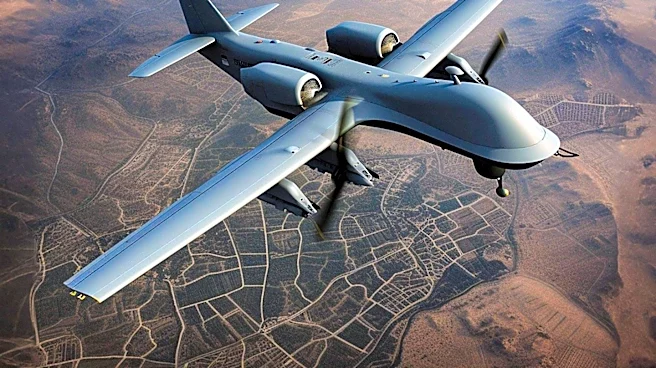
The U.S. Army is preparing to release a Request for Proposals (RFP) for its General Atomics MQ-1C Gray Eagle replacement program. This initiative, known as the Group 4+ Vertical/Short-Takeoff-and-Landing (VSTOL) effort, aims to field a long-endurance,
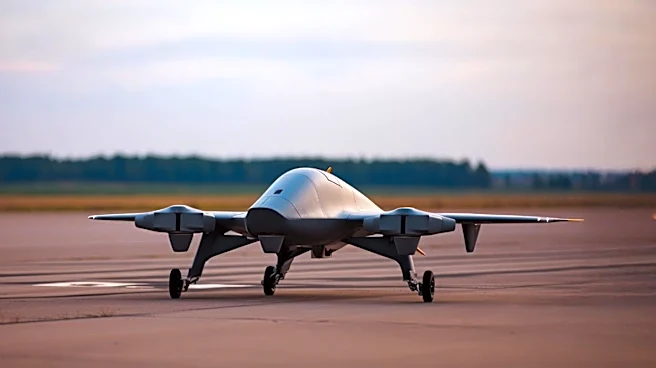
multimission aircraft for reconnaissance, surveillance, and target acquisition. The Army has already gathered feedback from industry through a previous solicitation and a 'challenge' program to understand current capabilities. Maj. Gen. Phillip 'Cain' Baker, commander of the Army’s Aviation Center of Excellence, emphasized that the focus extends beyond just the airframe to a broader uncrewed aircraft architecture that can operate, provide information to soldiers, and collaborate with other aircraft. Companies like Shield AI, General Atomics Aeronautical Systems, and Anduril have already announced their proposed solutions, including the X-Bat, Mojave, and Thunder uncrewed aircraft systems, respectively.
Why It's Important?
This planned RFP is a critical step in modernizing the U.S. Army's uncrewed aerial systems (UAS) capabilities, ensuring it maintains technological superiority in reconnaissance and combat support. The shift towards a VSTOL platform indicates a need for greater operational flexibility, allowing for deployment and recovery in diverse and austere environments without relying on traditional runways. The emphasis on a broader uncrewed aircraft architecture, rather than just a single platform, signifies a strategic move towards integrated, networked warfare, where UAS can seamlessly share information and collaborate with other assets. This modernization effort will have significant implications for defense contractors, as companies compete for lucrative contracts, driving innovation and investment in advanced aerospace technologies. Ultimately, the success of this program will enhance the Army's ability to conduct intelligence gathering and precision strikes, impacting national security and military effectiveness.
What's Next?
The immediate next step is the release of the official Request for Proposals, which will detail the Army's specific requirements and evaluation criteria for the Gray Eagle replacement. Following the RFP, defense contractors will submit their detailed proposals, leading to a competitive selection process. The Army will then evaluate these proposals, potentially conducting further demonstrations or tests of the proposed systems. The goal is to select a system that not only meets the technical and operational requirements but also aligns with the broader uncrewed aircraft architecture vision and keeps costs down by leveraging existing technologies from other military services. The development and eventual fielding of the chosen platform will represent a significant upgrade to the Army's aerial intelligence and strike capabilities, with initial deliveries likely several years away.
Beyond the Headlines
The Gray Eagle replacement program reflects a broader strategic shift in military doctrine towards increasingly autonomous and networked warfare. The focus on a comprehensive 'uncrewed aircraft architecture' suggests a future where individual drones are part of a larger, interconnected system, capable of complex collaborative missions. This raises deeper questions about the ethical implications of autonomous weapons systems, the role of human decision-making in future conflicts, and the potential for new forms of cyber warfare targeting these interconnected networks. Furthermore, the program's emphasis on VSTOL capabilities highlights the evolving nature of global conflict zones, where traditional airfields may be vulnerable or unavailable. The competition among defense contractors also drives innovation in areas like artificial intelligence, advanced propulsion, and sensor technologies, with potential spillover benefits for civilian applications in areas like logistics, surveillance, and emergency response.