





What's Happening?
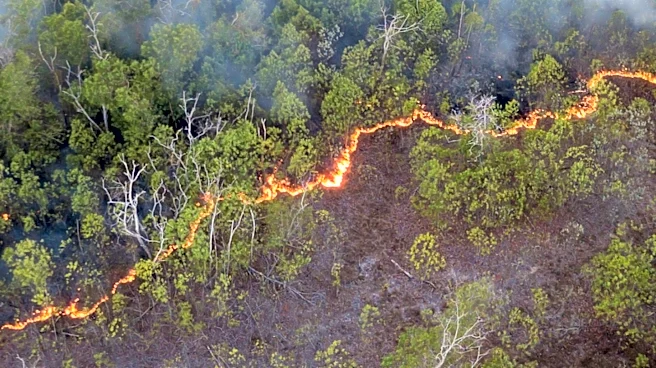
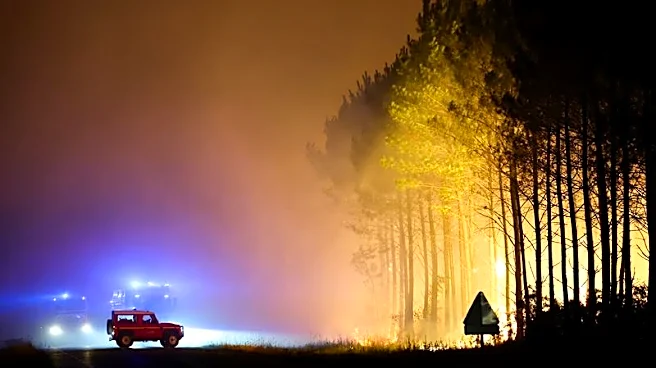
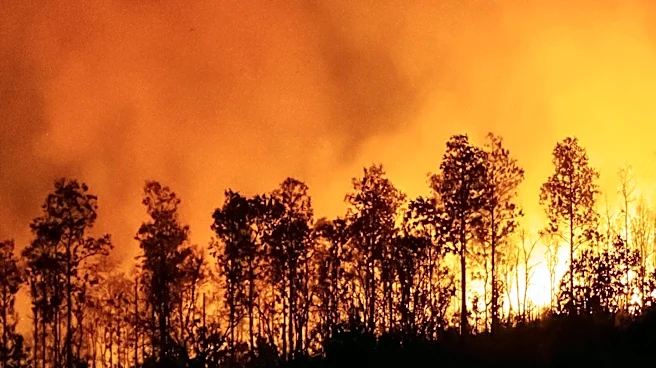
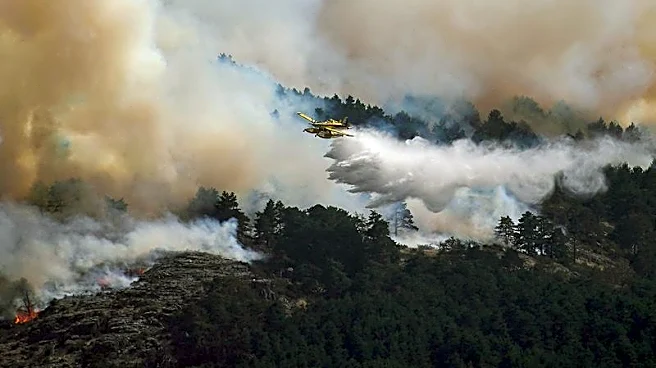
Spain is currently facing one of its largest wildfires in recent history, located in the Guadalajara region north of Madrid. The fire has burned approximately 32,000 hectares, prompting the evacuation of 1,200 people from 34 villages and confinement orders
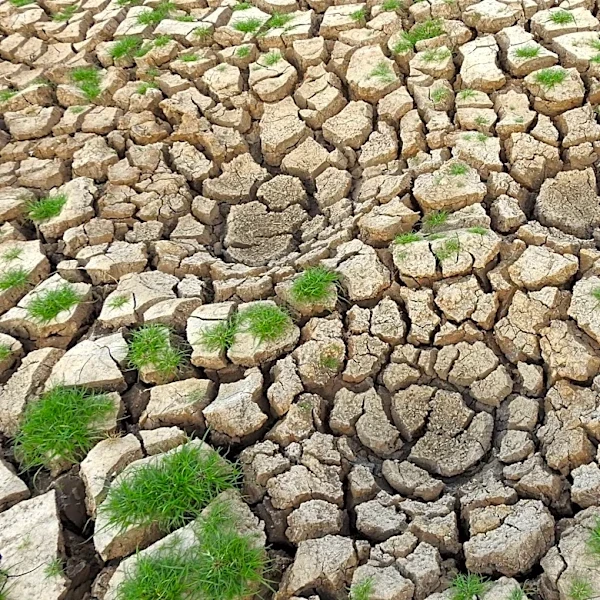
in 14 others. The Spanish national weather agency, Aemet, has issued warnings of a 'very high or extreme' danger of wildfires, with temperatures expected to reach 42-44°C. This situation is part of a broader heatwave affecting much of Europe, characterized by extreme heat, wind, and limited rainfall, which are ideal conditions for wildfires to grow unchecked. The fire comes shortly after another deadly blaze in southern Spain, which resulted in 13 fatalities.
Why It's Important?
The wildfire in Spain highlights the increasing frequency and intensity of such events, attributed to human-driven climate change. This has significant implications for public safety, environmental conservation, and economic stability in the region. The evacuations and destruction of land underscore the urgent need for effective climate policies and disaster preparedness. The situation also reflects broader European challenges, as the continent is experiencing rapid warming, leading to more frequent heatwaves and wildfires. The economic impact is substantial, with potential losses in agriculture, tourism, and infrastructure, while the social impact includes displacement and health risks for affected communities.
What's Next?
Authorities are working to stabilize the fire, with some residents already allowed to return home. However, the ongoing heatwave poses a continued threat, potentially complicating firefighting efforts. Spanish Prime Minister Pedro Sánchez has called for increased public awareness and action to address the climate emergency. The government may need to implement stricter fire prevention measures and invest in resources to combat future wildfires. The situation could also prompt international cooperation and policy discussions on climate change mitigation and adaptation strategies.
Beyond the Headlines
The wildfire crisis in Spain serves as a stark reminder of the broader climate emergency facing the world. It raises ethical questions about the responsibility of governments and industries in contributing to climate change and the need for equitable solutions that protect vulnerable populations. The cultural impact is also significant, as communities grapple with the loss of homes and heritage sites. Long-term, this event could drive shifts in public opinion and policy, emphasizing sustainability and resilience in the face of environmental challenges.