

What's Happening?
NASA astronauts aboard the International Space Station (ISS) are engaging in a variety of research activities, including space gardening and health monitoring. Chris Williams, a NASA flight engineer, is testing new exercise equipment and conducting plant
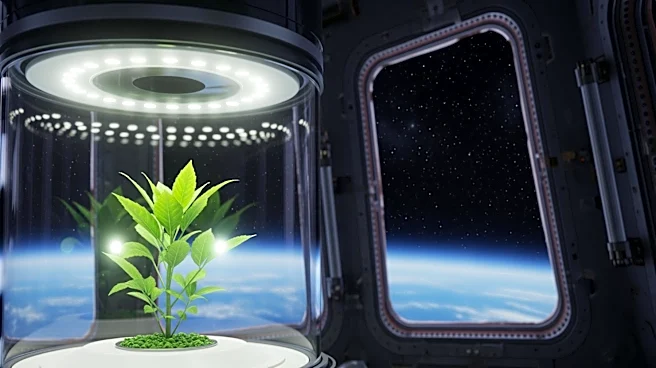
growth experiments in the Columbus laboratory module. The European Enhanced Exploration Exercise Device (E4D) is being evaluated for its effectiveness in supporting crew workouts during long-term missions. Additionally, Williams is involved in watering and photographing alfalfa plants to study plant-microbe interactions in microgravity. Meanwhile, ESA astronaut Sophie Adenot and NASA's Jack Hathaway are performing health checks using the Ultrasound 3 device to monitor blood pressure and artery health. The crew is also involved in unpacking supplies from the Progress 95 cargo craft and maintaining spacesuits.
Why It's Important?
The research conducted on the ISS is crucial for understanding the effects of long-term space travel on human health and for developing sustainable life-support systems for future missions. The exercise equipment being tested could play a significant role in maintaining astronaut health on missions to Mars and beyond. The space gardening experiments are vital for developing food production systems in space, which are essential for long-duration missions. The health monitoring activities help in identifying and mitigating potential health risks associated with space travel, ensuring the safety and well-being of astronauts.
What's Next?
The ongoing research on the ISS will continue to provide valuable insights into human health and plant growth in space. The results from these experiments could inform the design of future space missions and habitats, particularly those aimed at Mars exploration. The data collected will also contribute to the development of new technologies and protocols for maintaining astronaut health and supporting life in space.