What's Happening?
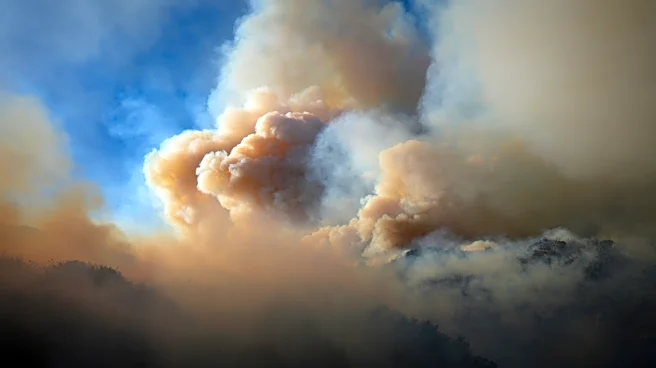
NASA researchers have observed a rise in the number and intensity of wildfires in the Arctic, attributed to the region's rapidly changing climate. The Arctic is warming nearly four times faster than the global
average, leading to drier conditions and more frequent lightning strikes, which are primary ignition sources for these fires. The fires are burning larger, hotter, and longer, impacting the Arctic's ecosystems. The report, published by the Arctic Monitoring and Assessment Programme, highlights the significant changes in fire behavior and their effects on the environment.
Why It's Important?
The increase in Arctic wildfires poses a significant threat to global climate stability. These fires release large amounts of carbon stored in peat and permafrost, contributing to global warming. The changing fire regime affects local ecosystems, wildlife, and human communities, potentially leading to long-term environmental and economic impacts. Understanding these changes is crucial for developing strategies to mitigate their effects and adapt to the evolving climate conditions.
What's Next?
Scientists are focusing on improving monitoring and modeling of Arctic fires to better understand their causes and impacts. New satellite technologies and artificial intelligence are being developed to enhance data collection and analysis. These efforts aim to inform policy decisions and guide future research on climate change and its effects on the Arctic. International collaboration will be essential in addressing the challenges posed by these environmental changes.