

What's Happening?
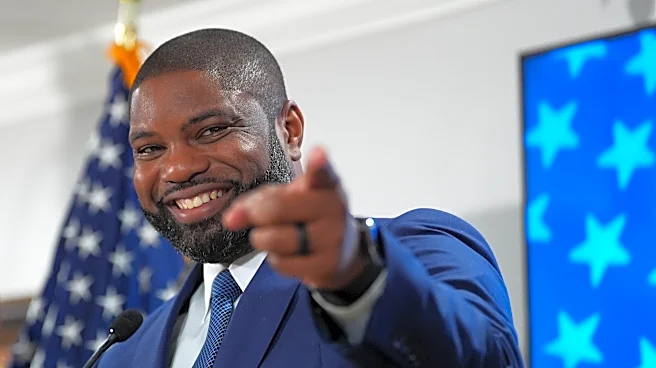
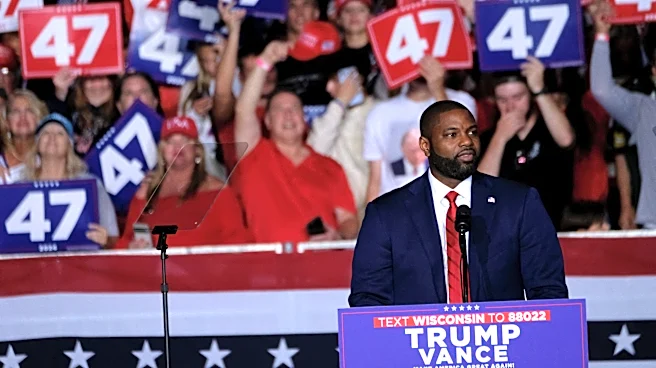
U.S. Rep. Byron Donalds has won the Republican nomination for Florida governor, while former Rep. David Jolly secured the Democratic nomination in Tuesday’s primaries. This sets the stage for a significant fall campaign to determine who will replace outgoing
Governor Ron DeSantis and shape the state's future political direction. Donalds, if elected, would be Florida’s first Black governor. He defeated several contenders, including Lt. Gov. Jay Collins and James Fishback. Donalds emphasized unity within the Republican Party after his primary victory and acknowledged President Trump's backing as important but not solely determinative. Jolly, a former Republican congressman who switched parties last year, embraced his new party while advocating for a platform that balances capitalist principles with government support for education and housing. This marks the second consecutive time Florida Democrats have nominated a former Republican for governor.
Why It's Important?
This election will serve as a crucial test of President Trump’s influence in Florida and the Democratic Party's efforts to re-establish the state as a competitive political battleground. Florida has trended Republican since President Trump's 2016 victory, and the upcoming gubernatorial race will indicate whether Democrats can capitalize on any perceived decline in his popularity. The candidacies of Donalds and Jolly present distinct visions for Florida's future. Donalds' platform focuses on tax cuts, insurance regulation reform to lower consumer costs, and healthcare price transparency. Jolly, on the other hand, advocates for ending 'culture wars' and a government that stays out of personal lives, while still addressing societal needs. The outcome will not only determine the state's leadership but also its policy trajectory on key issues affecting residents and businesses.
What's Next?
The general election in November will see Byron Donalds and David Jolly face off for the Florida governorship. Both candidates will now focus on consolidating support from their respective parties and appealing to independent voters. Donalds will likely continue to campaign on his promises of tax cuts and regulatory reforms, aiming to energize the Republican base. Jolly will need to convince voters of his bipartisan appeal, balancing his embrace of capitalism with his commitment to social programs. The campaign will also be influenced by the broader national political climate and the performance of President Trump, whose endorsement Donalds acknowledged as significant. Additionally, the U.S. Senate special election will feature progressive state Rep. Angie Nixon against Sen. Ashley Moody, further shaping Florida's political landscape.
Beyond the Headlines
The nomination of Byron Donalds as the Republican candidate for governor carries significant historical weight, as he could become Florida's first Black governor. This reflects evolving demographics and political dynamics within the state. David Jolly's journey from a Republican congressman to the Democratic gubernatorial nominee highlights the fluidity of political affiliations and the potential for cross-party appeal, particularly in a state like Florida where political shifts have been notable. The election will also shed light on the effectiveness of different campaign strategies, including the impact of endorsements from national figures like President Trump versus grassroots organizing and policy-focused appeals. The outcome could influence future political strategies for both parties in other swing states, offering insights into voter priorities and the evolving political identity of the American South.