




What's Happening?
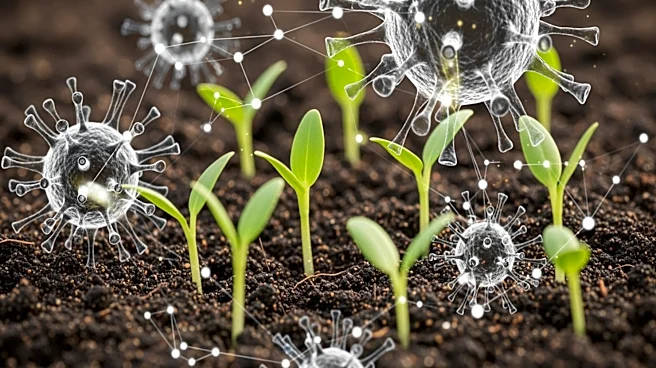
Recent research highlights the potential of phage bioaugmentation in soil bioremediation. Phages, which are viruses that infect bacteria, can transfer auxiliary metabolic genes (AMGs) to enhance microbial capabilities in contaminated soils. This process
can improve stress tolerance and pollutant transformation, making it a promising strategy for environmental cleanup. The study suggests that lysogenic phages, which integrate into the host genome, can provide long-term benefits by enhancing microbial fitness and pollutant degradation. The research emphasizes the importance of understanding phage-host interactions and environmental conditions to optimize phage use in soil biotechnology.
Why It's Important?
The application of phage bioaugmentation in soil bioremediation could revolutionize environmental cleanup efforts. By enhancing the natural microbial processes, phages can accelerate the breakdown of pollutants, offering a sustainable and efficient solution to soil contamination. This approach could significantly reduce the reliance on chemical treatments and mechanical interventions, which are often costly and environmentally damaging. The ability to target specific pollutants and improve microbial resilience also holds promise for restoring ecosystems affected by industrial activities, agricultural runoff, and other sources of pollution.
What's Next?
Future research will focus on optimizing phage selection and delivery methods to maximize their effectiveness in various soil types and contamination scenarios. Understanding the environmental factors that influence phage activity, such as soil pH, moisture, and temperature, will be crucial for developing tailored bioaugmentation strategies. Additionally, regulatory frameworks will need to evolve to ensure the safe and responsible use of engineered phages in natural environments. As the field progresses, collaborations between scientists, policymakers, and industry stakeholders will be essential to translate these findings into practical applications.
Beyond the Headlines
The use of phages in bioremediation raises important ethical and ecological considerations. The potential for engineered phages to disrupt native microbial communities or transfer genes to unintended hosts must be carefully assessed. Long-term studies are needed to evaluate the ecological impacts and ensure that phage bioaugmentation does not inadvertently harm biodiversity or ecosystem functions. Public engagement and transparent communication will be key to addressing societal concerns and building trust in this emerging technology.