



What's Happening?
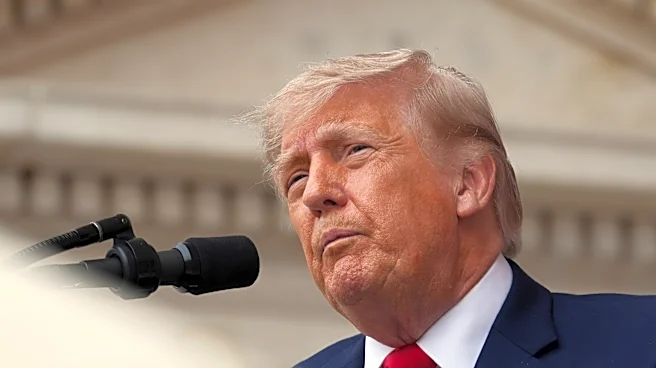
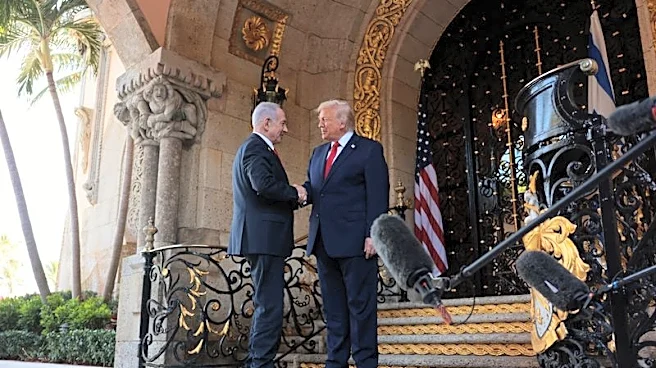
President Trump is attempting to reinvigorate the Abraham Accords, a diplomatic initiative from his first term, as part of a broader strategy to normalize relations between Middle Eastern countries and Israel. This effort comes in the context of ongoing
negotiations between the U.S. and Iran to end a prolonged conflict. Trump has urged regional partners, including Saudi Arabia, Qatar, and the UAE, to join the accords as a condition for their inclusion in any Iran peace deal. The Abraham Accords, initially brokered by Trump's son-in-law Jared Kushner, aimed to address the Palestinian-Israeli conflict by encouraging Arab nations to recognize Israel. Despite previous successes, such as agreements with the UAE and Bahrain, the accords face challenges as regional dynamics shift and trust in U.S. leadership wanes.
Why It's Important?
The push to expand the Abraham Accords is significant as it reflects the U.S.'s strategic interests in the Middle East, particularly in countering Iranian influence. For President Trump and Israeli Prime Minister Benjamin Netanyahu, securing new signatories to the accords could provide a much-needed diplomatic victory ahead of upcoming elections. However, the initiative faces skepticism from key regional players like Saudi Arabia, which has been vocal about its support for Palestinian statehood. The success or failure of this diplomatic effort could impact U.S. relations with Gulf states and influence the broader geopolitical landscape, potentially affecting military, economic, and diplomatic ties in the region.
What's Next?
The future of the Abraham Accords depends on the willingness of Middle Eastern countries to engage with Israel under the current terms. Saudi Arabia's stance will be pivotal, as its participation could encourage other nations to follow suit. However, the kingdom's insistence on Palestinian self-determination as a precondition for normalization poses a significant hurdle. The U.S. may need to offer substantial incentives to persuade reluctant countries. Meanwhile, regional powers like Pakistan and Turkey are likely to resist pressure due to domestic support for Palestine. The evolving situation will require careful navigation by the U.S. to maintain its influence and achieve its diplomatic objectives.
Beyond the Headlines
The Abraham Accords highlight the complex interplay of regional politics, where traditional alliances are being reevaluated. The initiative underscores the challenges of balancing U.S. foreign policy goals with the aspirations of Middle Eastern nations seeking greater autonomy in their diplomatic decisions. As countries like Saudi Arabia explore alternative frameworks, such as a regional non-aggression pact, the U.S. may need to adapt its approach to remain a relevant player in the region. The accords also raise questions about the long-term viability of U.S.-imposed solutions in a rapidly changing geopolitical environment.