







What's Happening?
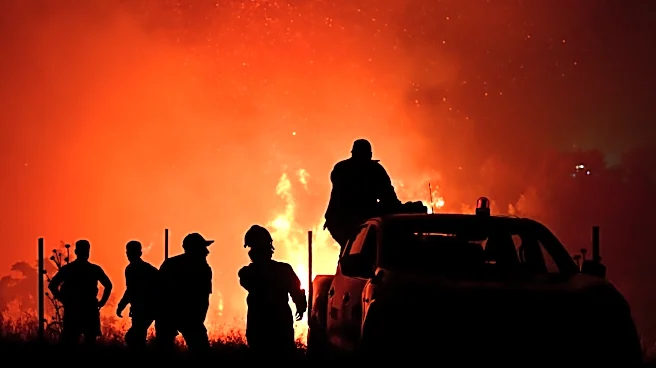
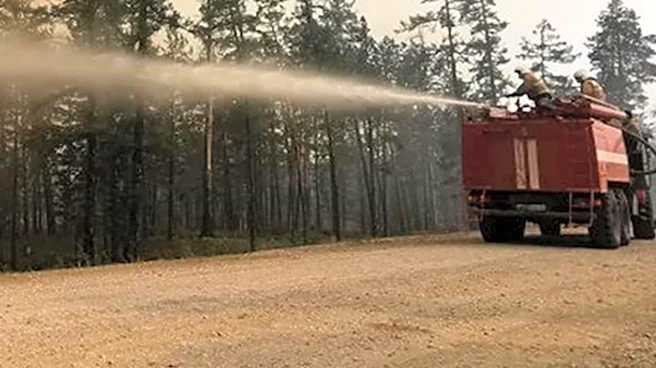
In Lisbon, emergency response efforts are currently concentrated on combating wildfires affecting Portugal, Greece, and Spain. In Portugal's Vouzela area, over 1,200 firefighters, supported by nearly 400 vehicles and 15 aircraft, are battling a massive
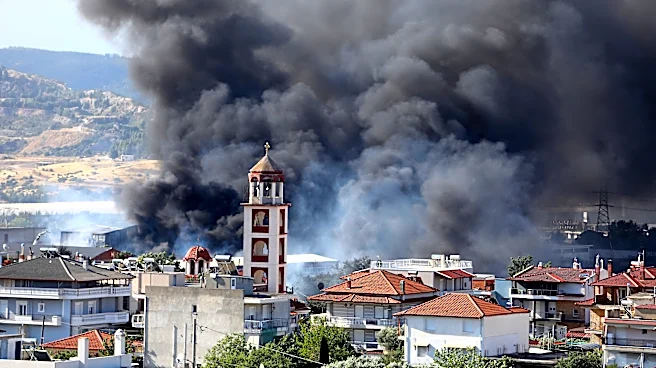
blaze that has burned across 12,000 hectares. Reinforcements from Spain and Italy have been deployed to assist. In Greece, toxic smoke from a wildfire near Thessaloniki has prompted authorities to urge residents to stay indoors. A fire at a recycling plant in Oraiokastro has led to evacuation alerts and damage to several businesses and homes.
Why It's Important?
The wildfires pose significant threats to public safety, environmental health, and economic stability in the affected regions. The deployment of international reinforcements underscores the severity of the situation and the need for cross-border cooperation in disaster management. The toxic smoke in Greece highlights the potential health risks to residents, while the damage to infrastructure could have long-term economic impacts. The situation also raises concerns about the increasing frequency and intensity of wildfires, potentially linked to climate change, which could necessitate more robust preventive measures and emergency response strategies.
What's Next?
Authorities in the affected regions are likely to continue monitoring the situation closely, with ongoing firefighting efforts and potential evacuations as needed. The international community may increase support if the fires persist or worsen. In the longer term, there may be discussions on improving fire prevention and response strategies, as well as addressing the underlying factors contributing to the increased incidence of wildfires, such as climate change and land management practices.
Beyond the Headlines
The wildfires highlight the broader issue of climate change and its impact on natural disasters. As temperatures rise and weather patterns become more unpredictable, regions like Southern Europe may face more frequent and severe wildfires. This could lead to increased pressure on governments to implement sustainable land management practices and invest in technologies for early detection and rapid response to such disasters.