




What's Happening?
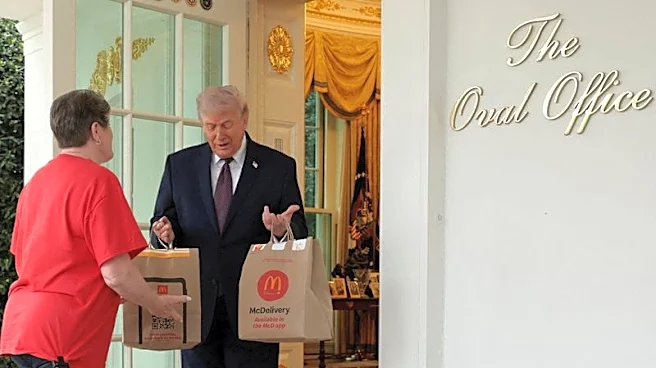
Sharon Simmons, known as the 'DoorDash Grandma,' has refuted claims that she was a paid actor during a recent White House event. The event, which took place on Monday, featured Simmons delivering McDonald's bags to President Trump as part of a televised
promotion for the 'no tax on tips' policy. The appearance quickly sparked online speculation, with some accusing the Trump administration of staging the event and questioning Simmons' authenticity as a DoorDash worker. In response, Simmons appeared on Fox & Friends, asserting that she is not an actor and has been a DoorDash driver since 2022, completing over 14,000 deliveries. DoorDash confirmed her employment, and the White House shared the event on social media, emphasizing the policy's benefits. Despite the backlash, Simmons maintained her support for the policy, which allows eligible workers to claim a tax deduction on tips from 2025 to 2028.
Why It's Important?
The controversy surrounding Simmons' appearance highlights broader societal issues regarding gig economy workers and the economic pressures faced by older Americans. Critics argue that the event underscores the challenges of a system where individuals, including seniors, rely on gig work to make ends meet. The 'no tax on tips' policy is positioned as a financial relief measure, yet it also raises questions about the sustainability of such work as a primary income source. The event has sparked debate over the portrayal of gig workers in political contexts and the ethics of using such events for policy promotion. The policy itself could have significant implications for millions of workers who depend on tips, potentially increasing their take-home pay.
What's Next?
As the 'no tax on tips' policy takes effect, eligible workers will be able to claim deductions on their 2025 tax returns. The policy is set to last through 2028, and its impact on workers' financial situations will be closely monitored. Political reactions are likely to continue, with Democrats criticizing the policy as insufficient in addressing the broader economic challenges faced by gig workers. The event may also prompt further discussions on the role of gig work in the U.S. economy and the need for comprehensive policy solutions to support these workers.
Beyond the Headlines
The event with Simmons at the White House brings to light the cultural and ethical dimensions of using gig economy workers in political promotions. It raises questions about the portrayal of economic policies and the realities faced by those in precarious employment situations. The criticism from worker advocacy groups highlights the need for a deeper examination of the gig economy's role in society and the potential long-term effects of relying on such work for financial stability.