





What's Happening?
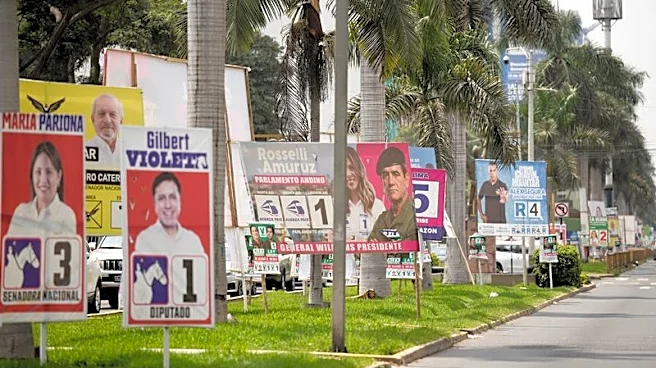
Peru is preparing for a presidential election with a record 35 candidates vying for the position. The election comes at a time of heightened crime and corruption, leading to widespread voter discontent. Among the candidates are a former minister, a comedian,
and Keiko Fujimori, a political heiress making her fourth presidential bid. The election is mandatory for Peruvians aged 18 to 70, with over 27 million registered voters. A candidate needs more than 50% of the votes to win outright, but a runoff is expected due to the divided electorate. The election also includes a vote for a new bicameral Congress, which will have significant power over the presidency.
Why It's Important?
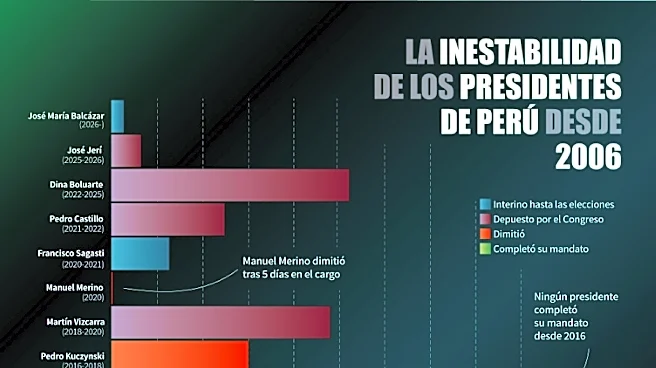
The election is crucial as it takes place against a backdrop of increasing crime rates, with homicides and extortion cases rising sharply. The candidates' proposals to address crime, such as building megaprisons and reinstating the death penalty, reflect the urgency of the issue. The election will also test the new bicameral legislative system, which could impact the stability of the presidency. The outcome will influence Peru's approach to crime, governance, and economic policies, affecting both domestic and international stakeholders.
What's Next?
With a runoff likely, the election process will extend into June, keeping the political landscape uncertain. The new Congress will have the power to impeach the president more easily, which could lead to further political instability. The international community will be watching closely, as Peru's political and economic stability is vital for regional dynamics. The election results will also shape Peru's future policies on crime and governance, potentially setting a precedent for other countries facing similar challenges.