
What's Happening?
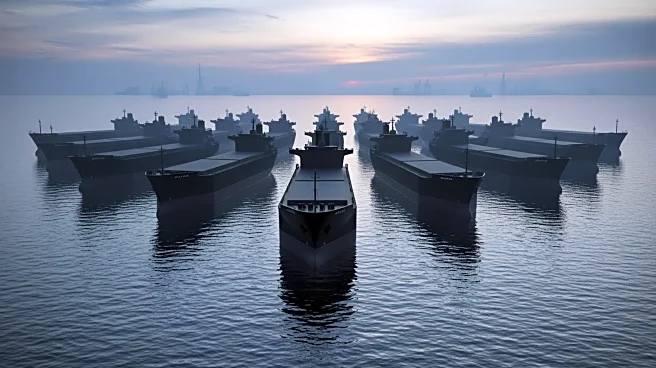
The European Union has added 41 shadow fleet vessels, including tankers and bulkers, to its sanctions list as of December 18. This move is part of a broader strategy to exert pressure on Moscow and bolster
support for Kyiv. The EU's decision marks a shift towards monthly reviews of sanctions rather than waiting for larger packages. The targeted vessels are banned from accessing EU ports and receiving various services, as they are involved in circumventing the oil price cap mechanism or supporting Russia's energy sector. Additionally, the EU is sanctioning vessels transporting military equipment for Russia and those involved in moving stolen Ukrainian grain and cultural goods. This action follows the EU's previous sanctions against nine businessmen and energy traders, labeled as 'shadow fleet enablers.' The EU has now sanctioned a total of 604 vessels.
Why It's Important?
The EU's sanctions are significant as they aim to weaken Russia's economic base by targeting its shadow fleet, which is crucial for its cash flow. By imposing these sanctions, the EU seeks to disrupt Russia's ability to circumvent international restrictions and continue its military activities. The sanctions also demonstrate the EU's commitment to supporting Ukraine, as evidenced by the record €27 billion in military aid provided this year. This move could potentially strain Russia's economic resources and limit its capacity to sustain its military operations. The EU's actions may also encourage other international actors to adopt similar measures, further isolating Russia economically and diplomatically.
What's Next?
The EU plans to continue its monthly review of the sanctions, potentially expanding the list of targeted vessels and individuals. This ongoing strategy indicates a sustained effort to pressure Russia and support Ukraine. The EU's readiness to adopt further sanctions suggests that it is prepared to escalate its actions if necessary. The international community will likely monitor these developments closely, as they could influence global economic and geopolitical dynamics. Stakeholders, including political leaders and businesses, may need to adjust their strategies in response to the evolving situation.