
What's Happening?
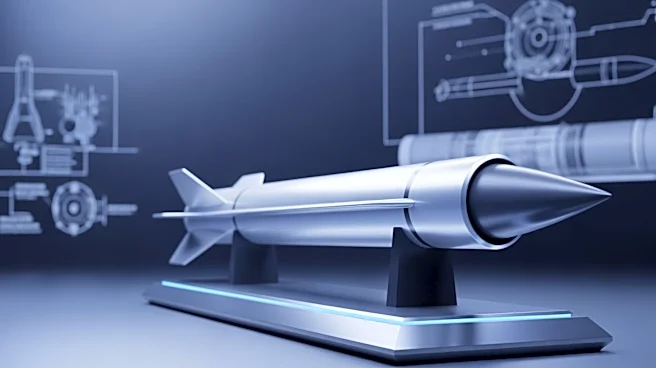
The Pentagon has announced agreements with four defense tech companies—Anduril, CoAspire, Leidos, and Zone 5 Technologies—to develop and produce low-cost cruise missiles under the 'Low-Cost Containerized
Missiles' (LCCM) program. This initiative aims to expand the U.S. military's stockpile of affordable missiles, addressing concerns about munitions availability during major conflicts. The program reflects a strategic shift towards involving 'disruptive new entrants' in the defense sector, moving beyond traditional contractors like Lockheed Martin. The Pentagon plans to procure over 10,000 low-cost cruise missiles over three years starting in 2027, with testing set to begin in June 2026.
Why It's Important?
This initiative marks a significant change in the U.S. defense procurement strategy, emphasizing cost-effectiveness and rapid production capabilities. By engaging with innovative tech companies, the Pentagon aims to enhance its military readiness and sustainment capabilities in prolonged conflicts. The focus on low-cost munitions is particularly relevant given the lessons learned from recent conflicts, where high-end munitions were quickly depleted. This approach not only diversifies the defense industrial base but also encourages private sector investment and innovation in military technology. The success of this program could set a precedent for future defense procurement strategies, potentially reshaping the industry landscape.
What's Next?
The Pentagon will begin testing missiles from the participating companies in mid-2026, with full-scale production expected to follow. The success of these tests will determine the viability of the LCCM program and its potential expansion. Additionally, the Department of Defense may explore further collaborations with tech startups to develop other low-cost military technologies. As the program progresses, it will be important to monitor the impact on traditional defense contractors and the broader implications for U.S. military strategy.