
What's Happening?
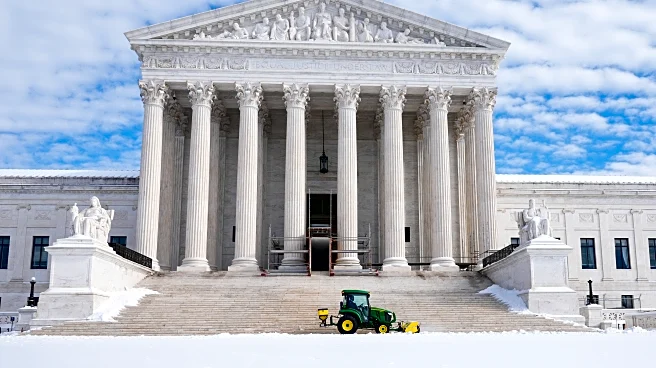
The U.S. Supreme Court has ruled against President Trump's attempt to deploy National Guard troops in Illinois without the state's consent. The administration sought to federalize the National Guard to address
what it described as ongoing violence against Immigration and Customs Enforcement agents in the Chicago area. However, two lower courts had previously ruled against this move, stating that the situation did not constitute a 'rebellion or danger of rebellion' that would justify such federal intervention. The Supreme Court's decision, which came after months of deliberation, does not set a legal precedent but clarifies the limitations of the president's power to deploy military resources domestically. Justices Samuel Alito and Clarence Thomas dissented, arguing that the court overstepped its authority by addressing broader issues rather than the specific question posed by the administration.
Why It's Important?
This ruling is significant as it underscores the limitations of presidential power in deploying military forces within the United States, particularly against the wishes of state governments. It highlights the ongoing tension between federal authority and state sovereignty, especially in matters of domestic security and law enforcement. The decision is a setback for President Trump's administration, which has faced multiple legal challenges over its use of federal forces in domestic situations. The ruling may influence future cases involving the deployment of military resources and the interpretation of the Posse Comitatus Act, which restricts the use of the military for domestic law enforcement. It also reflects the judiciary's role in checking executive power, a critical aspect of the U.S. constitutional system.
What's Next?
The case may return to the Supreme Court after the court of appeals hears full arguments and renders a decision. Meanwhile, President Trump cannot deploy National Guard troops in Illinois without the governor's approval. The administration may continue to seek legal avenues to justify its actions, potentially leading to further court battles. The ruling could also prompt discussions among lawmakers about the need to clarify or amend existing laws governing the use of military forces domestically. State officials, particularly in Illinois, are likely to continue opposing federal interventions that they view as overreaching.