



What's Happening?
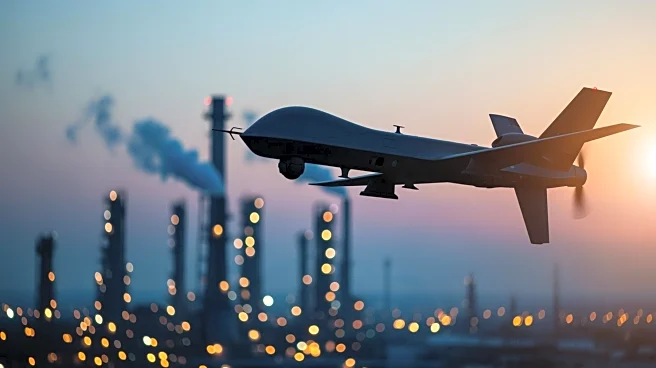
Ukrainian forces have intensified their drone strike campaign against Russian oil infrastructure, particularly targeting facilities near the Baltic Sea. On the night of March 26 to 27, Ukrainian drones struck the Transneft-Port Primorsk oil terminal and
the Novatek Ust-Luga oil terminal in Leningrad Oblast. This marks the fourth strike in five days against Russian oil infrastructure in the region. The Ukrainian General Staff confirmed that previous strikes damaged several oil refining units and other facilities. These actions are part of a broader strategy by Ukraine to disrupt Russian energy operations as the conflict between the two nations continues.
Why It's Important?
The ongoing drone strikes by Ukraine on Russian oil infrastructure highlight the strategic importance of energy resources in the conflict. By targeting these facilities, Ukraine aims to weaken Russia's economic stability and its ability to sustain military operations. The strikes also expose vulnerabilities in Russian air defenses, as acknowledged by Russian sources. This development could have significant implications for global energy markets, potentially affecting oil prices and supply chains. Additionally, the strikes underscore the evolving nature of warfare, where unmanned aerial vehicles play a critical role in modern military strategies.
What's Next?
As the conflict persists, further drone strikes by Ukraine on Russian infrastructure are likely. This could prompt Russia to enhance its air defense systems to protect critical assets. The international community, particularly countries dependent on Russian energy exports, will closely monitor these developments. Potential diplomatic efforts may arise to de-escalate tensions and address the broader implications for regional and global stability.
Beyond the Headlines
The use of drones in this conflict raises ethical and legal questions about the conduct of warfare and the targeting of civilian infrastructure. The strikes could lead to increased scrutiny of international laws governing armed conflict and the use of unmanned systems. Additionally, the situation may influence future military doctrines and the development of counter-drone technologies.