





What's Happening?
Florida citrus growers are planting new trees modified with gene-editing technology to combat the devastating citrus greening disease. This bacterial infection, spread by the Asian citrus psyllid, has severely impacted Florida's citrus industry since
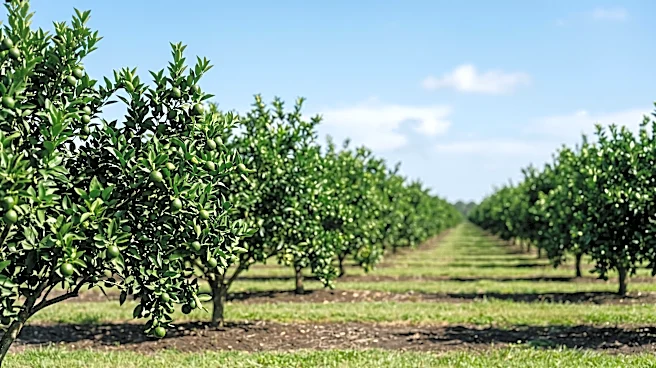
its arrival in 2005, leading to a massive decline in fruit production. The disease attacks the trees' immune systems, causing them to produce bitter, discolored fruit and eventually die, with no known cure. Soilcea, a Tampa-based company, utilized CRISPR gene-editing technology to develop a resistant rootstock called CarriCea T1. This modified rootstock aims to maintain the tree's immune function, potentially reducing the reliance on insecticides. The Environmental Protection Agency approved these genetic modifications earlier this year. Test fields are showing promising early results, with trees using the CarriCea T1 rootstock appearing taller and greener compared to unmodified trees, which exhibit discoloration and smaller, yellower leaves due to the disease.
Why It's Important?
The deployment of gene-edited citrus trees represents a critical effort to save Florida's struggling citrus industry. The citrus greening disease has caused a catastrophic decline in production, with annual box shipments plummeting from approximately 300 million in the late 1990s to just over 15 million in the most recent season. This drastic reduction has had significant economic consequences for growers and the state's agricultural sector. If successful, the CarriCea T1 rootstock could provide a sustainable solution to a problem that has defied conventional treatments, offering a lifeline to an industry that has seen businesses close due to the disease. The technology could also reduce the environmental impact of citrus farming by decreasing the need for extensive insecticide use. The success of this gene-editing approach could pave the way for similar biotechnological solutions in other agricultural sectors facing severe crop diseases, demonstrating the potential of genetic modification to address widespread agricultural challenges.
What's Next?
The immediate next step involves monitoring the long-term performance of the gene-edited trees, particularly regarding fruit production and taste. While early observations in test fields are positive, the true efficacy of the CarriCea T1 rootstock will only be fully understood after several years, as it takes time for the trees to bear fruit and for their long-term resilience to be assessed. Soilcea CEO Yianni Lagos emphasized that while data suggests the technology will work, a definitive understanding of the tree's performance requires a decade of observation. The industry will be closely watching these developments, as the success of this initiative could influence future investments in gene-editing technologies for agricultural applications. If the CarriCea T1 proves effective, it could lead to widespread adoption across Florida's citrus groves, potentially revitalizing the industry and securing its future.
Beyond the Headlines
This initiative highlights the evolving role of gene-editing technology, specifically CRISPR, in addressing complex agricultural and environmental challenges. Beyond the immediate economic impact on Florida's citrus industry, the successful application of CarriCea T1 could shift public perception and regulatory approaches towards genetically modified organisms (GMOs) in agriculture. The focus on rootstock modification, rather than the fruit itself, might also alleviate some consumer concerns about direct genetic alteration of edible produce. This development could spark broader discussions about food security, sustainable farming practices, and the ethical considerations surrounding genetic engineering. It also underscores the increasing reliance on scientific innovation to combat diseases that threaten vital food sources, potentially setting a precedent for how future agricultural crises are managed globally. The long-term implications could include a more resilient and environmentally friendly agricultural system, but also raise questions about biodiversity and the potential for unforeseen ecological impacts.