



What's Happening?
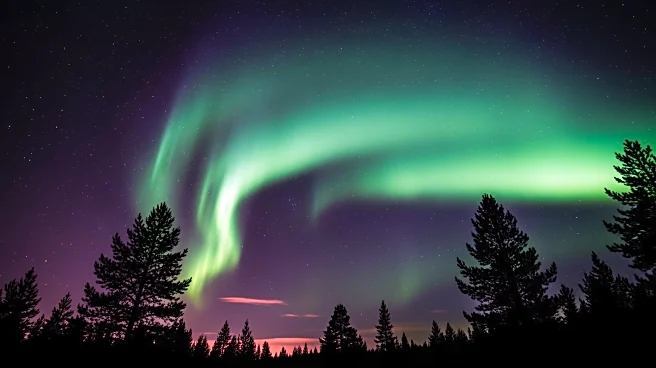
A significant geomagnetic storm, triggered by a full-halo coronal mass ejection (CME) from the sun, is expected to impact Earth early to midday on Tuesday. This event may make the Northern Lights visible across large portions of the northern United States.
The National Oceanic and Atmospheric Administration (NOAA) Space Weather Prediction Center (SWPC) announced the event following an M8.1-class solar flare, indicating that periods of G3 geomagnetic storming are likely. The storm coincides with heightened solar activity at the peak of the sun's 11-year cycle. Residents in Alaska and the northernmost sections of Washington, Idaho, Montana, Wyoming, North Dakota, South Dakota, Minnesota, Wisconsin, Michigan, New York, Maine, Vermont, and New Hampshire may have the best chances to witness the aurora. Sightings are most likely in dark, rural areas far from city lights, best viewed facing the northern horizon after sunset and before sunrise.
Why It's Important?
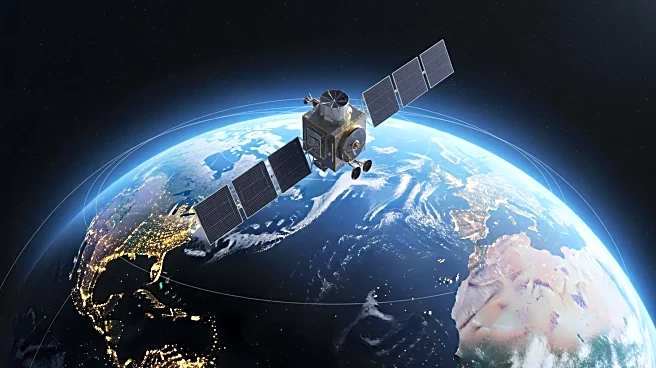
The geomagnetic storm not only offers a visual spectacle but also poses potential disruptions to technology, including communications networks, power grids, and GPS satellites. These disruptions highlight vulnerabilities in critical infrastructure to extreme space weather events. The storm's impact on Earth's upper atmosphere and magnetic field changes can lead to heightened currents, affecting power systems and navigation signals. The NOAA NWS SWPC has advised the public to remain vigilant regarding possible outages or disruptions between Tuesday and Wednesday. This event underscores the importance of monitoring space weather and preparing for its effects on technological systems.
What's Next?
The NOAA SWPC will continue to monitor solar and geomagnetic conditions, providing real-time updates about the CME impact and ensuing auroral activity. Ongoing observations will determine how far south the auroras will be visible and whether any adverse effects on technology materialize. Residents and operators are encouraged to maintain awareness via official NOAA communication channels and aurora forecast apps. The Geminid meteor shower, peaking on December 13 and 14, overlaps with the ongoing period of increased solar and auroral activity, offering skywatchers dual spectacles of meteors and auroras.