



What's Happening?
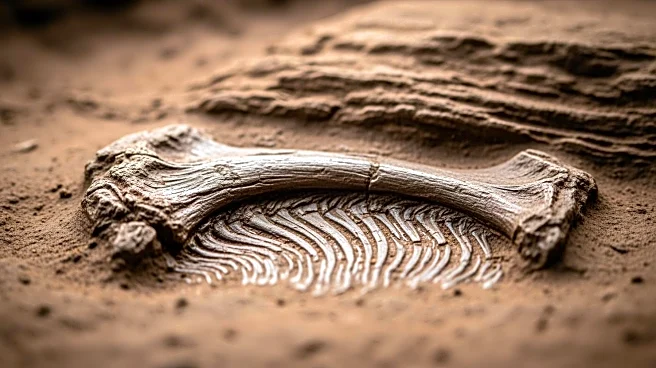
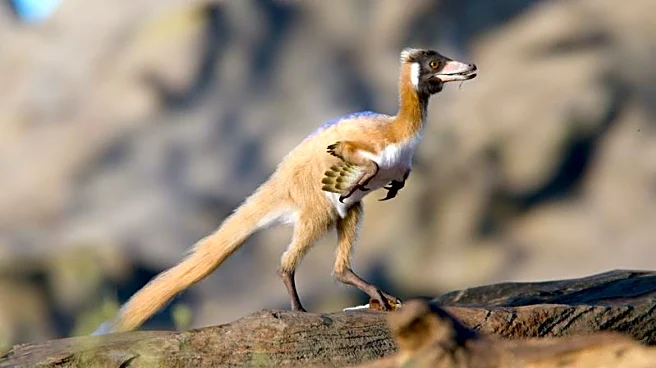
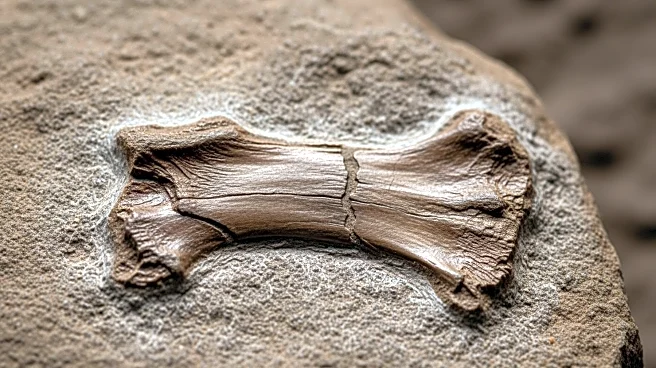
A team of researchers, co-led by Peter Makovicky from the University of Minnesota and Sebastian Apesteguía from Argentina, has uncovered a nearly complete skeleton of a dinosaur species named Alnashetri cerropoliciensis in Patagonia, Argentina. This discovery,
published in Nature, provides significant insights into the evolution of alvarezsaurs, a group of bird-like dinosaurs known for their unique anatomical features. Previously, the understanding of these dinosaurs was limited due to fragmented fossil records, primarily from Asia. The new fossil, found in the La Buitrera fossil area, offers a more comprehensive view of the species' anatomy and evolutionary history, indicating that these dinosaurs became small before developing specialized features like single-clawed arms and tiny teeth.
Why It's Important?
The discovery of the Alnashetri cerropoliciensis fossil is crucial for paleontology as it fills a significant gap in the evolutionary history of alvarezsaurs. This finding allows scientists to better understand the evolutionary transitions in anatomy and body size of these dinosaurs, which are among the smallest known non-avian dinosaurs. The research suggests that alvarezsaurs originated earlier than previously thought, dispersing as continents separated. This has implications for understanding the distribution and adaptation of species during the Cretaceous period, providing a clearer picture of prehistoric biodiversity and evolutionary processes.
What's Next?
The research team plans to continue studying fossils from the La Buitrera area, which has already yielded other significant finds. They aim to further explore the evolutionary history of alvarezsaurs and other prehistoric species. The ongoing research could lead to more discoveries that enhance our understanding of dinosaur evolution and the ecological dynamics of the Cretaceous period. Additionally, the team is preparing to publish further findings that may reveal more about the adaptations and survival strategies of these ancient creatures.