






What's Happening?
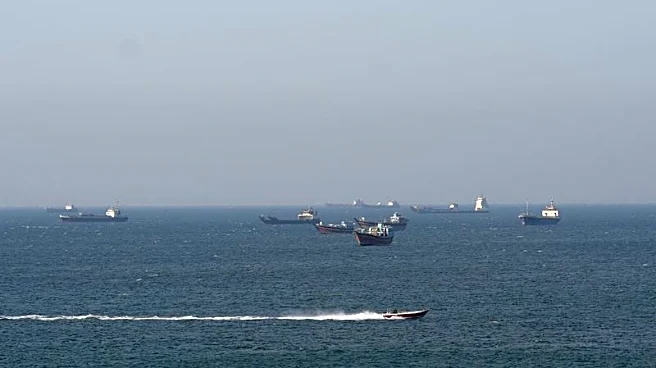
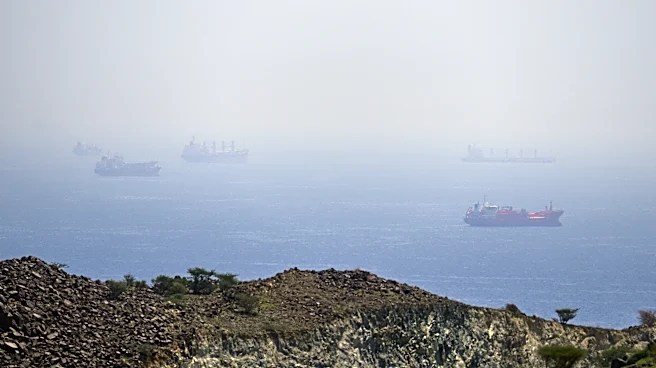
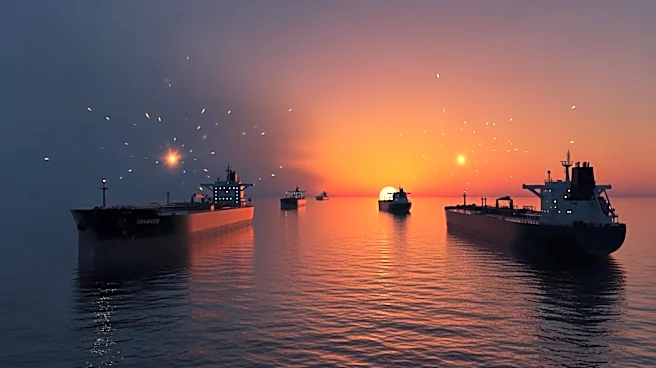
Iran has fired on two Indian-flagged merchant ships in the Strait of Hormuz, escalating tensions with the United States. This incident follows Iran's decision to close the strait again after briefly reopening it, in response to the US blockade of Iranian
ports. The attacks were captured in an audio recording, highlighting the dangerous situation in the region. The closure of the strait, a vital passage for global oil supply, has significant implications for energy markets. The Indian government has expressed deep concern over the incident and has summoned Iran's ambassador to convey its views.
Why It's Important?
The Strait of Hormuz is a critical chokepoint for global oil supply, and its closure could have severe repercussions for energy markets worldwide. The firing on Indian ships underscores the heightened risk of conflict in the region, which could further destabilize global markets. The US blockade and Iran's response highlight the ongoing geopolitical tensions that could escalate into broader conflict. The involvement of India, a major global player, adds another layer of complexity to the situation, as it seeks to protect its maritime interests.
What's Next?
Pakistan is attempting to mediate between the US and Iran to prevent further escalation. The ceasefire is set to expire soon, and whether a deal can be reached will significantly impact the region's stability. The international community will be closely watching the developments, as the outcome could affect global energy supplies and geopolitical dynamics. The potential for renewed conflict remains high if negotiations fail, with significant consequences for regional and global stability.