


What's Happening?
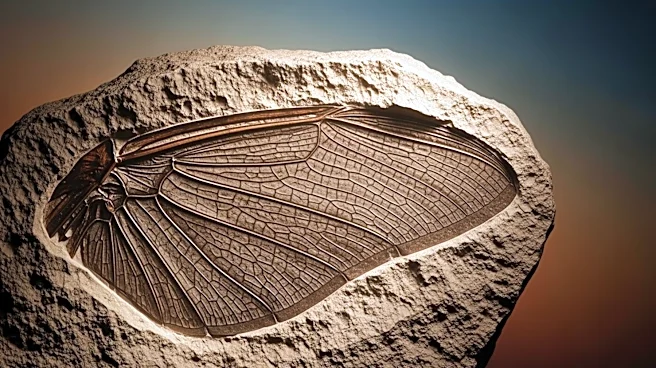
A new study published in Nature challenges the long-held belief that high atmospheric oxygen levels were responsible for the large size of prehistoric insects. Researchers, led by Edward Snelling from the University of Pretoria, used electron microscopy
to examine insect flight muscles and found that tracheole density, responsible for oxygen transport, did not significantly limit insect size. This finding suggests that other factors, such as predation or biomechanical limits, may have influenced the size of ancient insects.
Why It's Important?
The study's findings could reshape our understanding of evolutionary biology and the factors that influenced the development of life on Earth. By challenging the oxygen theory, researchers open new avenues for exploring the evolutionary pressures that led to the diversity of life forms. This could have implications for studying current biodiversity and understanding how species might adapt to changing environmental conditions.
What's Next?
Further research is needed to explore alternative explanations for the size of ancient insects, such as the role of predators or structural limitations of exoskeletons. Scientists may also investigate how these findings could apply to other prehistoric life forms and their evolutionary adaptations.
Beyond the Headlines
The study highlights the complexity of evolutionary processes and the need for interdisciplinary approaches to uncover the mysteries of Earth's history. It also underscores the importance of revisiting established scientific theories in light of new evidence and technological advancements.