







What's Happening?
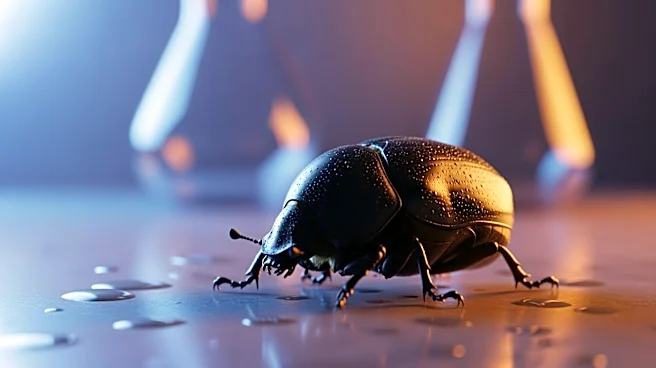
A recent study has examined the impact of temperature on the development and cuticular hydrocarbons of the beetle Dermestes maculatus, which is significant in forensic investigations. The research focused on how different temperatures affect the beetle's
development stages and chemical profiles, which are crucial for estimating the postmortem interval (PMI) in forensic cases. The study found that higher temperatures accelerated development but also led to developmental failures at extreme temperatures. These findings are important for forensic entomologists who rely on insect evidence to determine PMI, especially in varying environmental conditions.
Why It's Important?
The study's findings have significant implications for forensic science, particularly in the accurate estimation of PMI, which is critical in criminal investigations. Understanding how temperature affects beetle development can help forensic experts make more precise determinations about the time of death, especially in cases where traditional methods are less effective. This research also highlights the need for forensic practitioners to consider environmental factors, such as temperature, when analyzing insect evidence. The study contributes to the development of more accurate forensic tools and methodologies, potentially improving the reliability of forensic investigations.
What's Next?
Future research may focus on validating these findings under real-world conditions, where environmental factors fluctuate. Expanding the study to include other forensic insect species could provide a broader understanding of how temperature impacts forensic entomology. Additionally, developing comprehensive databases of insect development at various temperatures could enhance the accuracy of PMI estimations. Forensic practitioners may also explore integrating chemical profiling with traditional morphometric analysis to improve the precision of age estimations in forensic cases.