
What's Happening?
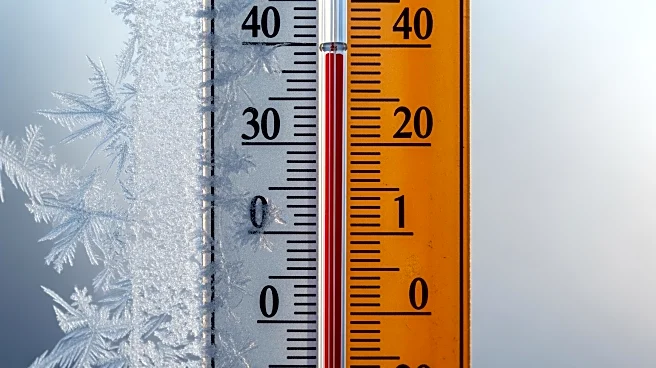
The United States has experienced one of its warmest winters on record, with the Lower 48 states seeing their second-warmest winter according to preliminary data. This winter was marked by a stark contrast between the frigid cold in the East and record warmth
in the West. Cities such as Salt Lake City, Phoenix, Las Vegas, and Cheyenne recorded their warmest winters, while the East experienced severe cold, snow, and ice. Despite the cold in the East, the overall warmth prevailed, highlighting the impact of climate change. Meteorologists have noted a contraction in the Northern Hemisphere's 'cold pool,' a layer of air cold enough to support snowflake formation, which was the smallest on record this winter.
Why It's Important?
This unusual winter pattern underscores the ongoing effects of climate change, with winters becoming the fastest-warming season in many parts of the U.S. The record warmth in the West raises concerns about potential summer droughts and wildfires, which could have significant environmental and economic impacts. The shrinking 'cold pool' serves as a clear indicator of human-caused climate change, suggesting that future winters may continue to break warmth records. This shift in climate patterns could affect agriculture, water resources, and energy consumption, impacting various sectors and communities across the country.
What's Next?
As climate change continues to influence weather patterns, the U.S. may need to prepare for more extreme weather events and their associated challenges. Policymakers and environmental agencies might focus on developing strategies to mitigate the effects of climate change, such as investing in renewable energy and improving infrastructure resilience. Additionally, communities in the West may need to implement water conservation measures and wildfire prevention strategies to cope with the anticipated summer conditions.