
What's Happening?
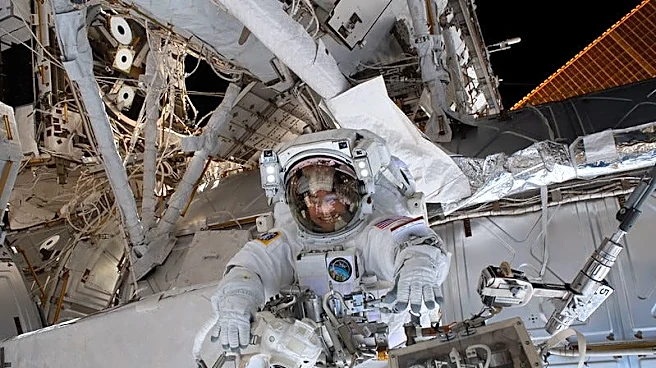
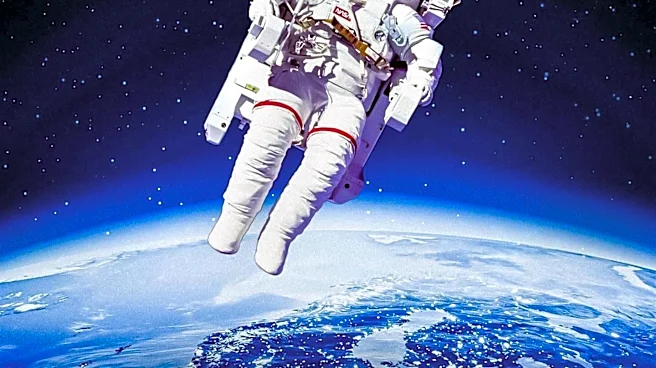
NASA astronauts Jessica Meir and Anil Menon successfully completed a 6-hour, 27-minute spacewalk outside the International Space Station (ISS) on August 6. Their primary objective was to prepare the 3B power channel for the future installation of a roll-out
solar array. During the spacewalk, a carbon dioxide sensor on Menon’s spacesuit indicated an unexpected reading, which returned to normal after the suit's removal. Engineers are evaluating whether to change suits for the next spacewalk, now rescheduled for August 18. The third planned spacewalk remains set for August 25. Meanwhile, ESA astronaut Sophie Adenot conducted exercise research to improve muscle and bone health in microgravity, and the Expedition 75 cosmonauts engaged in various scientific and maintenance tasks.
Why It's Important?
The successful completion of spacewalks is critical for the maintenance and operation of the ISS, ensuring the station's continued functionality and safety. The preparation for new solar arrays is part of ongoing efforts to upgrade the station's power systems, which are essential for supporting scientific research and daily operations. The exercise research conducted by ESA astronaut Sophie Adenot is vital for developing countermeasures to the adverse effects of long-duration spaceflight on human health, which is crucial for future missions to the Moon, Mars, and beyond. These activities highlight international collaboration in space exploration and the continuous advancement of human spaceflight capabilities.
What's Next?
NASA plans to conduct the next spacewalk on August 18 to replace a Space-to-Ground antenna, which is essential for maintaining high-speed data and communication transmissions between the ISS and Mission Control. The agency will provide additional details about the spacewalks in the coming days. Engineers will continue to assess the spacesuit issue to ensure astronaut safety in future operations. The ongoing research and maintenance activities aboard the ISS will continue to support scientific advancements and prepare for future exploration missions.