
What's Happening?
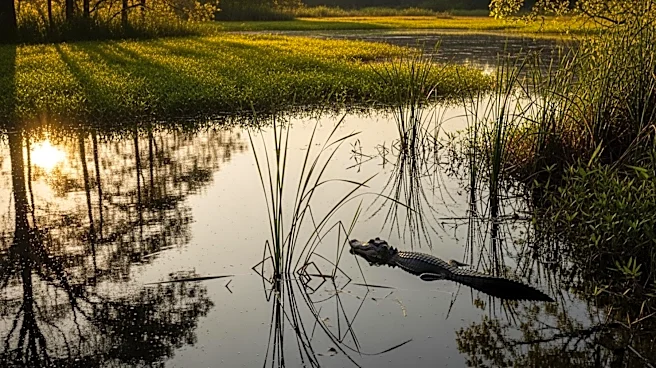
In Georgia, rising temperatures have led to increased visibility of alligators, as reported by the Georgia Department of Natural Resources. Wildlife biologist Kara Nitschke explains that warmer weather
prompts alligators to become more active, particularly during their breeding season. The state is home to an estimated 250,000 alligators, which can inhabit various water bodies, including ponds, lakes, and rivers. Residents are advised to maintain a safe distance from these reptiles, as feeding them is illegal and can lead to dangerous encounters. The department emphasizes the importance of public awareness and safety measures, such as keeping pets on leashes and supervising children near water bodies.
Why It's Important?
The increased visibility of alligators in Georgia due to rising temperatures underscores the broader impacts of climate change on wildlife behavior and human interactions. As alligators become more active, the potential for human-wildlife conflicts rises, necessitating enhanced public education and safety protocols. This situation also highlights the need for ongoing research into the effects of climate change on species distribution and behavior. The economic implications are notable, as increased alligator sightings could affect tourism and local businesses reliant on outdoor activities. Additionally, the legal and ethical considerations of wildlife management practices come to the forefront, as authorities balance conservation efforts with public safety.