




What's Happening?
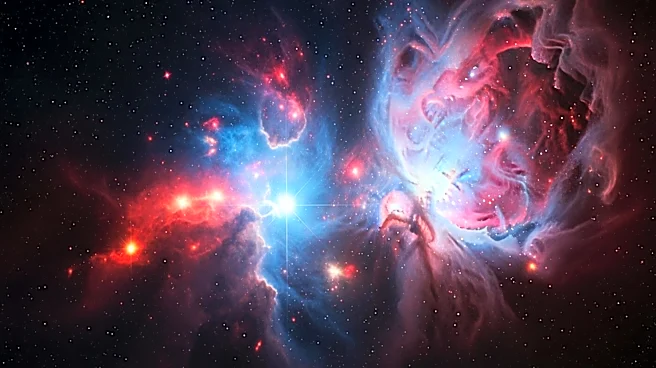
NASA's Hubble Space Telescope has captured a new image of the Trifid Nebula, a star-forming region located approximately 5,000 light-years from Earth. This image marks the 36th anniversary of Hubble's launch and highlights the nebula's intricate details,
reminiscent of an underwater scene. The Trifid Nebula, also known as Messier 20, has been shaped by massive stars over the past 300,000 years. These stars' powerful winds have created an enormous bubble, compressing the surrounding gas and dust, which triggers new waves of star formation. The Hubble's latest observations, compared to those from 1997, reveal changes in the nebula over time, thanks to an improved camera with a wider field of view and greater sensitivity.
Why It's Important?
The new observations of the Trifid Nebula by Hubble provide valuable insights into the processes of star formation and the interaction between young stars and their environments. By studying these changes over time, scientists can better understand the dynamics of star birth and the evolution of nebulae. This research is crucial for advancing our knowledge of the universe and the life cycles of stars. The Hubble Space Telescope, a collaboration between NASA and the European Space Agency, continues to be a vital tool for astronomers, offering unprecedented views of the cosmos and contributing to numerous scientific discoveries.
What's Next?
As Hubble continues to operate, its data will be combined with observations from other telescopes, such as NASA's James Webb Space Telescope and the upcoming Nancy Grace Roman Space Telescope. These collaborations will enhance opportunities for discovery and provide a more comprehensive understanding of the universe. Future missions, like the proposed Habitable Worlds Observatory, aim to build on Hubble's legacy by exploring habitable planets and searching for signs of life beyond Earth.