


What's Happening?
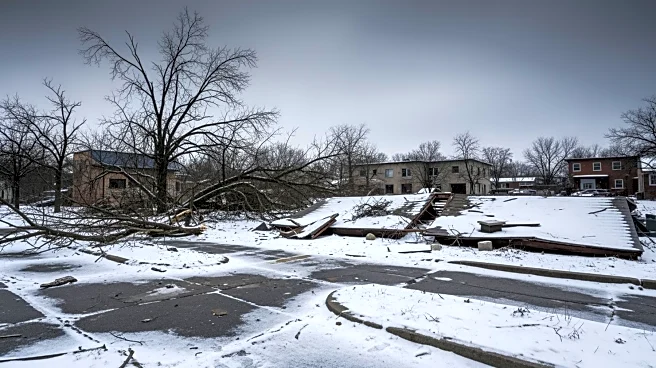
A severe winter storm has struck the Gaza Strip, resulting in the deaths of more than a dozen people, including an eight-month-old infant who succumbed to hypothermia. The storm, characterized by strong winds and heavy rains, has inundated the low-lying
coastal areas, flooding thousands of tents and causing the collapse of buildings already weakened by two years of Israeli bombardment. The Gaza Interior Ministry confirmed the fatalities, highlighting the dire conditions faced by residents as they grapple with the aftermath of the storm.
Why It's Important?
The storm exacerbates the already critical humanitarian situation in Gaza, where infrastructure has been severely compromised by ongoing conflict. The flooding and destruction of temporary shelters pose significant health risks, including the spread of waterborne diseases. The inability to access emergency shelter supplies further endangers the nearly 795,000 displaced individuals in the region. This situation underscores the urgent need for international aid and intervention to address the immediate needs of the affected population and to support long-term recovery efforts.
What's Next?
Efforts to provide relief and support to the affected communities are expected to intensify, with international organizations likely to call for increased access to the region to deliver essential supplies. The ongoing blockade and restrictions on movement may complicate these efforts, necessitating diplomatic negotiations to facilitate humanitarian aid. The international community's response will be crucial in determining the speed and effectiveness of the recovery process in Gaza.
Beyond the Headlines
The storm highlights the vulnerability of regions like Gaza to extreme weather events, which are becoming more frequent and severe due to climate change. The lack of resilient infrastructure and adequate disaster preparedness measures in conflict zones further compounds the impact of such natural disasters. This situation calls for a reevaluation of international policies and support mechanisms to enhance resilience and reduce the risk of future humanitarian crises.