





What's Happening?
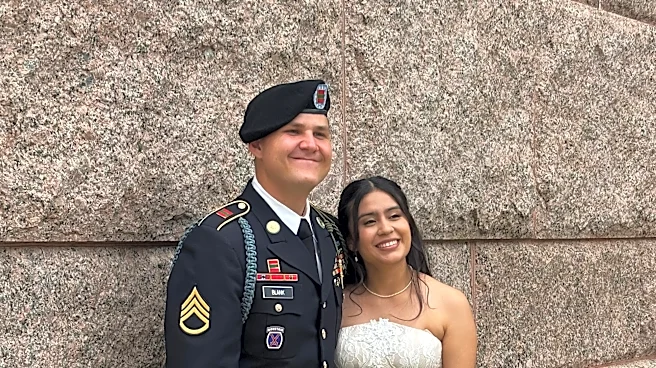
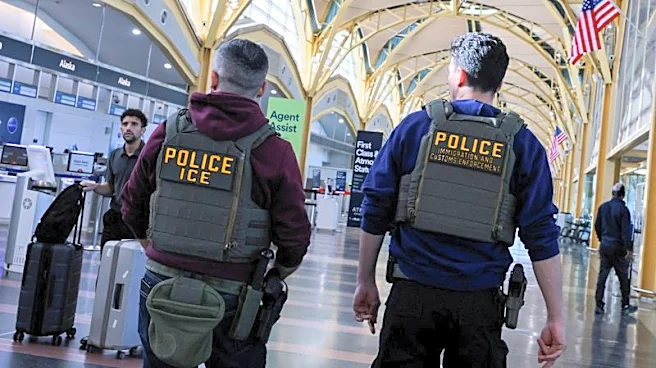
Annie Ramos, the wife of US Army Staff Sgt. Matthew Blank, was detained by federal immigration agents at a Louisiana military base as part of the Trump administration's mass deportation agenda. Ramos, who was born in Honduras and entered the US as a child,
was detained while attempting to apply for legal status and military benefits. Her detention has sparked backlash from military family advocates who argue that such actions demoralize military families and could undermine recruitment efforts. Ramos was released following public outcry, but her case highlights the administration's shift away from previous leniency towards military families in immigration enforcement.
Why It's Important?
The detention of military spouses like Annie Ramos underscores a significant shift in immigration policy under the Trump administration, which has moved away from practices that previously allowed military families to gain legal status more easily. This change has raised concerns about the impact on military morale and readiness, as well as the potential for undermining national security by destabilizing military families. The case has drawn attention from lawmakers and advocacy groups, who argue that the government's actions betray promises made to service members and could have long-term negative effects on military recruitment and retention.
What's Next?
Following Ramos's release, her focus will be on securing her legal status and continuing her education. Meanwhile, advocacy groups and lawmakers are likely to continue pressing for policy changes that protect military families from deportation. The Department of Homeland Security's current stance, which does not consider military service as a mitigating factor in immigration enforcement, may face further scrutiny and calls for revision. The broader implications for military families and national security will likely remain a topic of debate as the administration's immigration policies continue to evolve.
Beyond the Headlines
The case of Annie Ramos highlights deeper ethical and cultural questions about the treatment of military families and the values that underpin US immigration policy. The tension between enforcing immigration laws and supporting military families raises questions about the balance between national security and humanitarian considerations. As the US grapples with these issues, the experiences of families like the Blanks may serve as a catalyst for broader discussions about the role of immigration policy in supporting or undermining the military community.