
What's Happening?
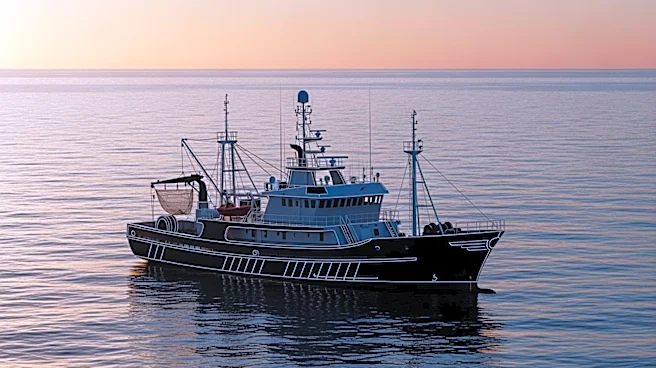
A report by the Blue Marine Foundation and Kroll has uncovered that European fishing companies are reflagging their vessels under the flags of countries like Mauritius, Tanzania, and Oman to access larger
tuna quotas in the Indian Ocean. This practice allows European firms to circumvent EU-imposed fishing limits, particularly for yellowfin and bigeye tuna, which are under pressure from overfishing. The report highlights that European companies have taken a third of the tropical tuna catch, despite commitments to reduce their impact. The reflagging strategy involves registering ships under foreign flags, making it challenging for regulators to track the true extent of European involvement. This finding comes ahead of the Indian Ocean Tuna Commission's annual meeting, where stakeholders will discuss the management of tuna stocks.
Why It's Important?
The reflagging of European fishing vessels has significant implications for global fishery management and sustainability. By exploiting foreign quotas, European companies can maintain high catch levels, potentially undermining efforts to rebuild vulnerable tuna stocks. This practice raises concerns about transparency and accountability in the fishing industry, as it obscures the true ownership and impact of these fleets. The situation also highlights the tension between economic interests and environmental sustainability, as countries and companies navigate the complex dynamics of international fisheries management. The findings could prompt calls for stricter regulations and greater transparency in vessel registration and ownership.
What's Next?
The upcoming meeting of the Indian Ocean Tuna Commission in the Maldives will be a critical forum for addressing these issues. Stakeholders, including the EU and coastal nations, will need to negotiate measures to ensure sustainable fishing practices and equitable quota distribution. There may be increased pressure on the EU to enforce stricter compliance with its fishing limits and to promote transparency in vessel ownership. Environmental groups are likely to advocate for reforms that enhance oversight and accountability in the fishing industry. The outcome of these discussions could shape the future of tuna fisheries management in the Indian Ocean.