




What's Happening?
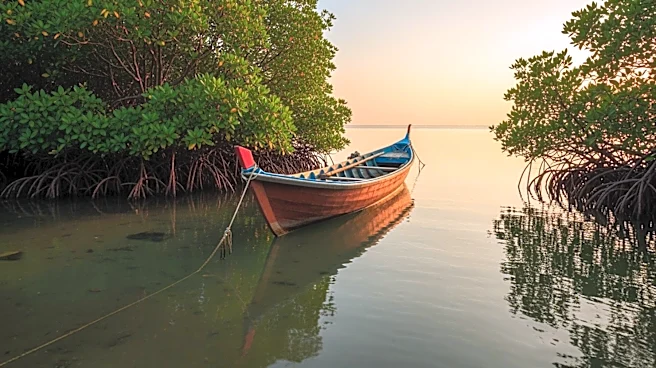
In the village of Torosiaje, located in a secluded cove in Indonesia, the Indigenous Bajau people have developed a unique relationship with their environment by utilizing mangroves to support their traditional fishing practices. Founded in 1901, Torosiaje is built
on the water, with houses, shops, and schools connected by bridges over the Molucca Sea. The Bajau, historically known as nomadic sea fishers, have settled in this area and are actively involved in conservation efforts to protect and cultivate mangroves. These efforts have helped restore fish populations and protect the coastline from erosion. The Bajau also use mangrove seeds for various traditional purposes, including making soap, medicines, and flour.
Why It's Important?
The Bajau community's use of mangroves highlights the importance of traditional ecological knowledge in sustainable resource management. By integrating conservation practices with their cultural heritage, the Bajau are able to maintain their livelihoods while preserving the environment. This approach serves as a model for other coastal communities facing similar challenges, demonstrating how traditional practices can contribute to modern conservation efforts. The Bajau's success in using mangroves to support their fishing practices also underscores the critical role of mangroves in coastal ecosystems, providing habitat for marine life and protecting shorelines from erosion.