
What's Happening?
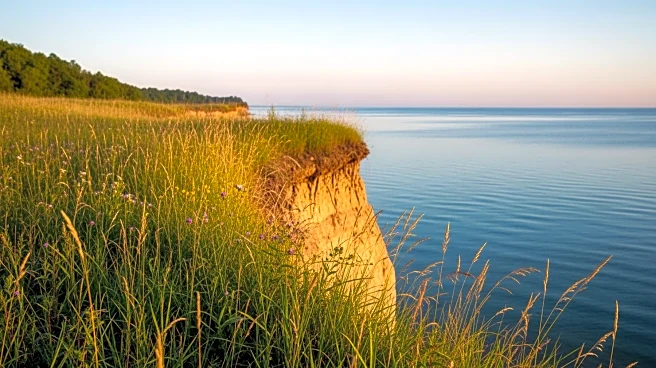
The Lake Forest Open Lands Association (LFOLA) has secured a $5.75 million federal grant from the National Oceanic and Atmospheric Administration (NOAA) to restore a rare ravine-bluff ecosystem along Lake Michigan. This initiative aims to stabilize eroding
bluffs, protect wildlife, improve water quality, and expand public access. The project will focus on a stretch of bluff near LFOLA’s Greene Nature Preserve, which has experienced significant erosion over the years. The restoration will involve the stabilization of 61 acres of ravine and shoreline habitats, enhancing habitats for over 100 bird species, nearly 50 rare plant species, and three threatened Great Lakes fish species. The project will also support conservation education and workforce training programs. Construction is set to begin in March, with most work expected to be completed by the end of the following year, although full restoration will continue for more than three years.
Why It's Important?
This project is significant as it addresses the environmental challenges posed by decades of urbanization and shoreline modification, which have led to vegetation loss, habitat degradation, and bluff instability. By restoring this fragile ecosystem, the project aims to enhance biodiversity, protect water quality, and ensure public access to natural spaces. The initiative represents a long-term commitment to coastal resilience, using nature-based solutions to address erosion and stability issues. This approach could serve as a model for similar efforts across the Great Lakes, demonstrating the effectiveness of combining local, state, and federal coordination with scientific expertise to achieve sustainable environmental outcomes.
What's Next?
The restoration project will begin with construction in March, focusing on using natural materials and strategically placed stone for erosion control. The Lake Forest Open Lands Association will continue to work with the Illinois Department of Natural Resources to ensure the project remains on track. As the project progresses, it is expected to provide valuable insights into the benefits of nature-based solutions for coastal restoration, potentially influencing future projects in the region. The ongoing commitment to this initiative highlights the importance of collaborative efforts in addressing environmental challenges and promoting sustainable development.