





What's Happening?
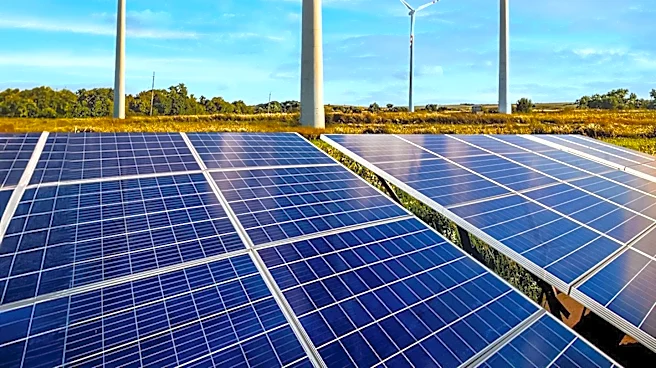
The Trump administration has acknowledged in a court filing that it selectively terminated clean energy project grants in states that voted for former Vice President Kamala Harris in the 2024 presidential election. This admission came as part of a legal
challenge against the administration's cancellation of Biden-era grants. The Department of Energy had initially compiled a list of 624 grants for termination, which was later reduced by the White House Office of Management and Budget, sparing projects in Republican-leaning states. The filing revealed that nearly 300 grants were terminated in states with Democratic senators or those that supported Harris. This decision has sparked criticism from Democratic lawmakers, who accuse the administration of abusing its power for political gain.
Why It's Important?
The admission by the Trump administration highlights the potential misuse of federal power to influence political outcomes, raising concerns about the integrity of government decision-making processes. The termination of these grants could have significant implications for the clean energy sector, particularly in states that rely on federal support to advance renewable energy projects. This move may hinder efforts to transition to sustainable energy sources, affecting job creation and economic growth in the affected states. The controversy also underscores the ongoing political divide over energy policy in the U.S., with potential long-term impacts on the country's ability to meet climate goals.
What's Next?
The court's response to this admission could lead to further legal challenges and scrutiny of the administration's actions. Democratic lawmakers are likely to continue pushing for accountability and may seek legislative measures to prevent similar actions in the future. The outcome of this case could influence future federal funding decisions and the broader political landscape, particularly as the country approaches the next election cycle. Stakeholders in the clean energy sector may also increase advocacy efforts to secure more stable and equitable funding mechanisms.