





What's Happening?
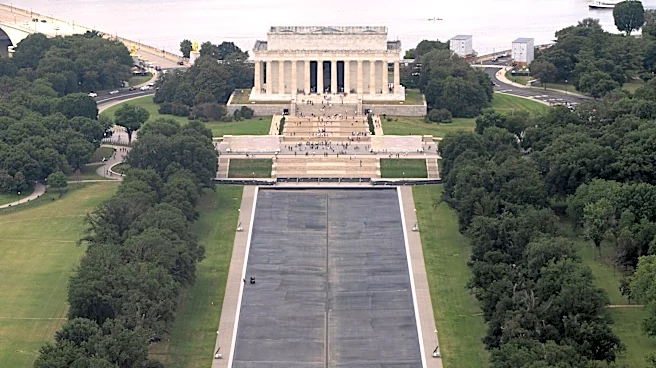
The case against David Hearn, a three-time Olympic canoeist accused of vandalizing the Reflecting Pool, has been dropped by federal prosecutors. The decision came after it was revealed that the damage to the pool was due to a botched installation rather
than vandalism. U.S. Attorney Jeanine Pirro's office filed a motion to dismiss the case, acknowledging that the evidence did not support the charges against Hearn. The Reflecting Pool, part of a $16.4 million renovation project, began showing signs of deterioration shortly after its reopening, with algae growth and peeling sealant. The legal filing blamed the Department of the Interior for providing misleading information that led to Hearn's indictment.
Why It's Important?
The dismissal of the case against Hearn underscores the potential for government overreach and the importance of accurate information in legal proceedings. The incident highlights the challenges of maintaining public infrastructure and the scrutiny faced by high-profile projects. For Hearn, the case has been a source of personal distress, affecting his reputation and well-being. The situation also raises questions about accountability and transparency in government projects, as well as the impact of rushed timelines and inadequate oversight. The case's resolution may prompt a reevaluation of procedures and communication between government agencies to prevent similar occurrences in the future.
What's Next?
With the case against Hearn dismissed, attention may turn to addressing the underlying issues with the Reflecting Pool's renovation. The pool has been drained, and there is uncertainty about the cause of the lining failure and whether similar problems will arise when it is refilled. The project, a priority for President Trump, faces scrutiny over its execution and the use of public funds. Moving forward, there may be calls for improved project management and oversight to ensure the integrity of public works. Additionally, the incident could lead to discussions about the role of government in managing large-scale infrastructure projects and the need for transparency and accountability.