




What's Happening?
The International Renewable Energy Agency (IRENA) released its World Energy Transition Outlook 2026 report in October, outlining the substantial investments and infrastructure required for a global energy transition. The report supports the COP30 Brazilian
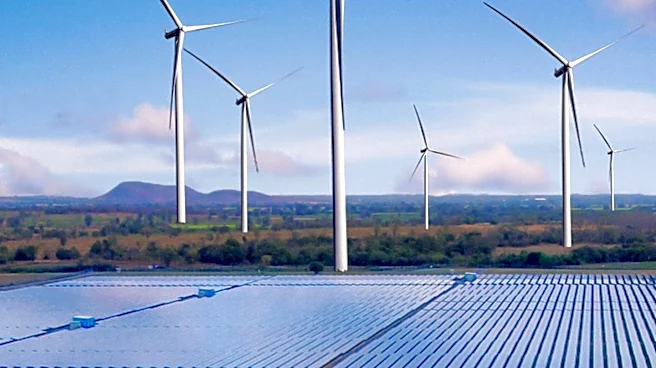
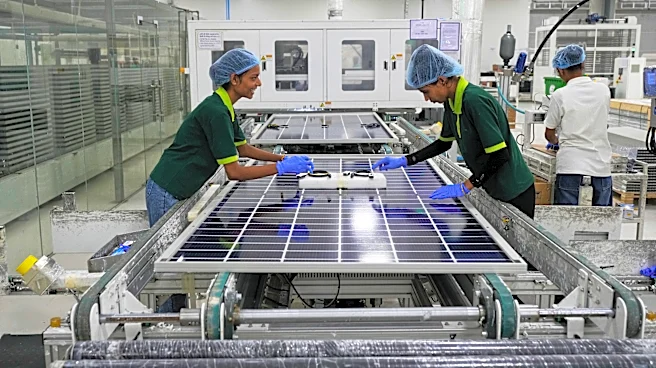
Presidency's roadmap for phasing out fossil fuels. To meet the 2035 target of nearly 18.4 terawatts (TW) of renewable energy capacity, an average of over 1.3 TW of net renewable capacity must be added annually between 2026 and 2035, primarily from solar and wind power. IRENA Director-General Francesco La Camera emphasized that simply adding renewables is insufficient; the transition must also incorporate affordability, social protection, and equitable economic access to maintain public support. The agency projects that electricity needs to constitute 35% of global energy use by 2035, necessitating a doubling of annual investment in electricity grids to $1 trillion. Furthermore, energy storage capacity must reach 2.5 TW by 2035 and 6.9 TW by 2050. The report estimates total investment under its proposed energy transition pathway to exceed $256 trillion between 2026 and 2050, which is approximately $78 trillion more than current government plans suggest. Developing economies face significant challenges due to high financing costs, currency risks, and limited capital access.
Why It's Important?
This IRENA report underscores the immense financial and infrastructural scale of the global energy transition, directly impacting U.S. energy policy, investment strategies, and technological development. The projected $256 trillion investment highlights a massive market opportunity for U.S. companies in renewable energy generation, grid modernization, and energy storage technologies. However, it also signals potential economic challenges if the U.S. does not keep pace with global investment and deployment rates. The emphasis on grid investment and energy storage capacity indicates critical areas for innovation and infrastructure development within the U.S., which currently faces its own challenges in grid resilience and modernization. The report's focus on affordability and equitable access also has implications for U.S. energy justice initiatives and consumer policy, as the transition must be managed to avoid disproportionately burdening certain communities. For U.S. industries, particularly manufacturing and technology sectors, the global demand for renewable energy components and smart grid solutions presents both a competitive landscape and an export opportunity. Failure to address these investment needs could leave the U.S. vulnerable to energy insecurity and hinder its ability to meet climate targets.
What's Next?
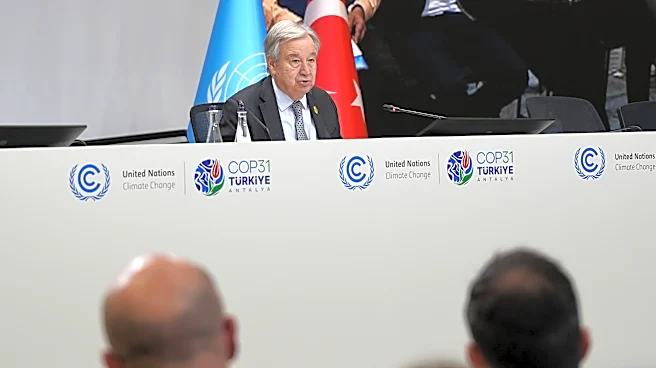
Following IRENA's report, international discussions at future climate conferences, such as COP31, will likely intensify around financing mechanisms and collaborative strategies to meet these ambitious renewable energy targets. Developing economies, facing the steepest financing challenges, will likely seek increased international climate finance and technology transfer, potentially influencing U.S. foreign policy and aid commitments. Domestically, the U.S. government and private sector will need to evaluate current investment levels in renewable energy infrastructure against IRENA's projections. This could lead to new policy initiatives aimed at accelerating grid upgrades, expanding energy storage, and incentivizing private investment in clean energy. Stakeholders, including energy companies, financial institutions, and environmental groups, will likely advocate for policies that streamline permitting processes, offer financial incentives, and foster technological innovation to bridge the investment gap. The report also suggests a continued focus on supply chain resilience, especially given the volatility in equipment costs, such as the recent increase in Chinese solar module prices, which could prompt diversification efforts in U.S. manufacturing and sourcing strategies.
Beyond the Headlines
The IRENA report's call for a $256 trillion investment signifies a fundamental reshaping of the global economy, moving beyond mere energy production to a comprehensive transformation of infrastructure, finance, and societal structures. This transition carries profound ethical implications regarding global equity, as developing nations, often least responsible for climate change, bear a significant burden in financing their energy transitions. The report implicitly challenges the current global financial architecture to provide more accessible and affordable capital to these nations, raising questions about the role of international financial institutions and developed countries, including the U.S., in facilitating this shift. Legally, the scale of infrastructure required may necessitate new regulatory frameworks and international agreements to standardize technologies, ensure grid interoperability, and manage cross-border energy flows. Culturally, the shift towards a fully electrified society powered by renewables will alter consumption patterns, urban planning, and industrial processes, potentially leading to new societal norms around energy use and sustainability. The report highlights that the energy transition is not just a technological or economic challenge but a complex socio-political undertaking that requires unprecedented global cooperation and a re-evaluation of existing power dynamics.