







What's Happening?
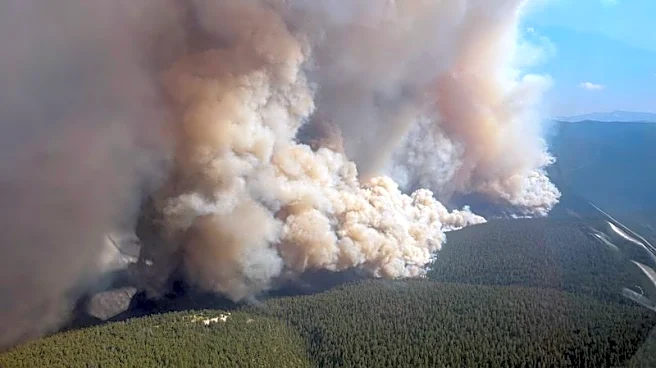
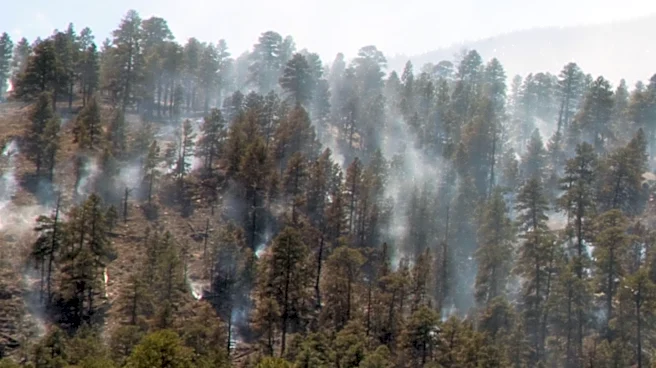
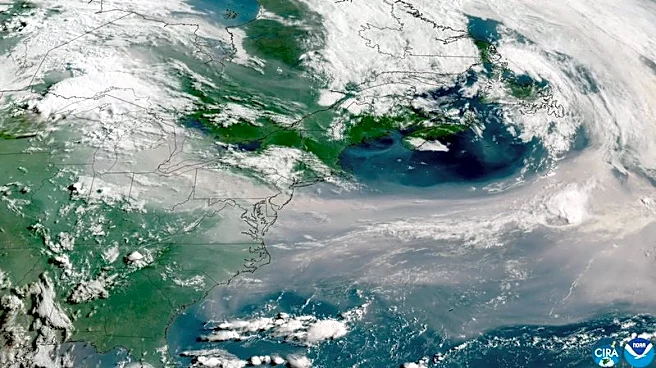
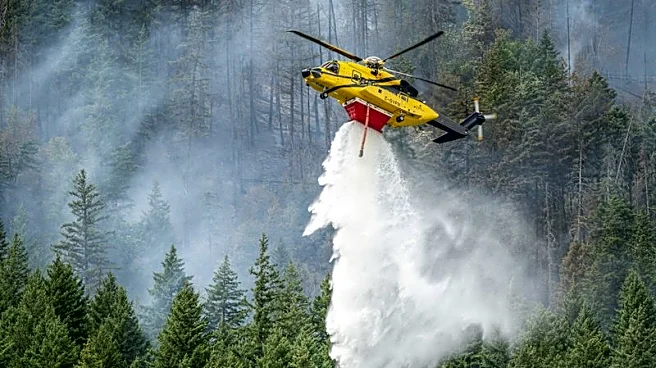
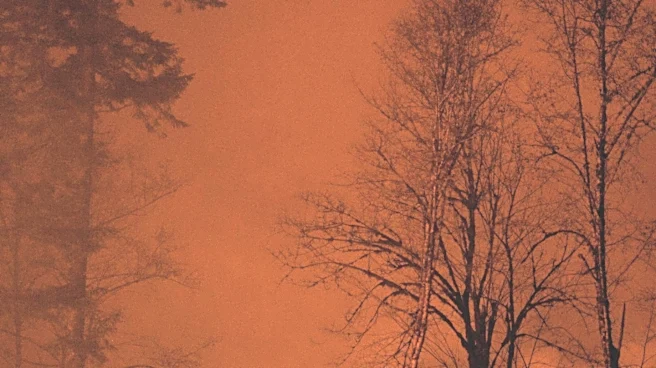
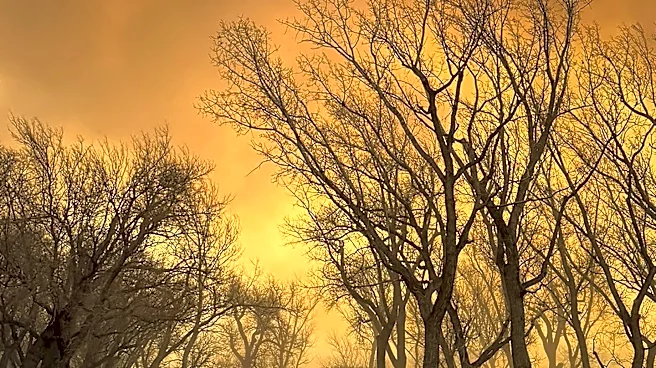
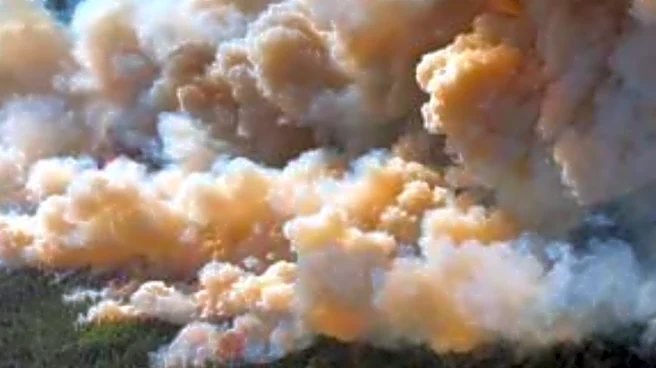
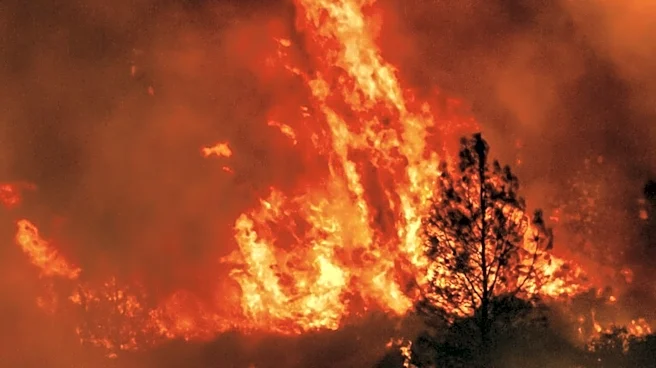
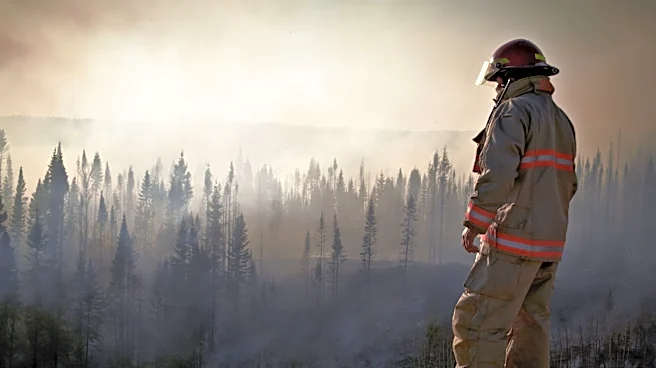
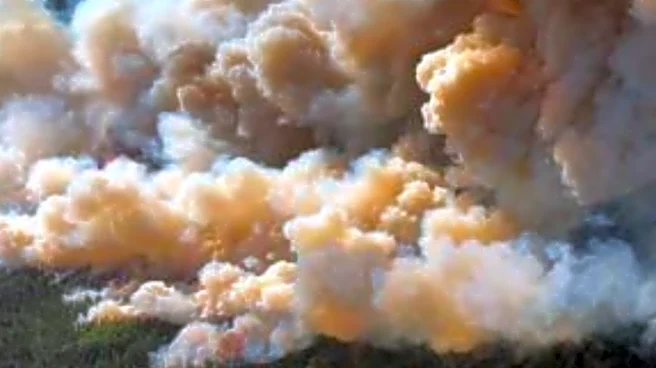
The Canadian military is preparing to evacuate the community of Fort Hope in northwestern Ontario due to the threat of spreading wildfires. These fires have resulted in smoke drifting across the border, affecting air quality in the United States. Federal
Emergencies Minister Eleanor Olszewski announced that aircraft would be used for the evacuation, as the region is largely inaccessible by road. The fires have become a regular occurrence in Canada, exacerbated by rising temperatures and drier conditions. As of the latest reports, 69 new fires were recorded overnight, with a total of 955 active fires. The U.S. Environmental Protection Agency has issued air quality alerts, rating the air as 'unhealthy' in several states, including Ohio, West Virginia, Pennsylvania, and New Jersey. President Trump has criticized Canadian forest management and suggested adding costs related to the smoke to existing tariffs on Canadian goods.
Why It's Important?
The wildfires in Canada and their impact on U.S. air quality highlight the interconnectedness of environmental issues across borders. The smoke has led to health warnings in several U.S. states, affecting millions of residents. This situation underscores the importance of international cooperation in addressing climate change and forest management. The economic implications are also significant, as President Trump's comments suggest potential trade tensions between the U.S. and Canada. The ongoing fires and their management could influence future environmental policies and trade agreements between the two countries.
What's Next?
The immediate focus is on the evacuation of Fort Hope and managing the ongoing wildfires. The U.S. is likely to continue monitoring air quality and issuing health advisories as needed. In the longer term, this event may prompt discussions on cross-border environmental policies and cooperation. President Trump's stance on tariffs could lead to further diplomatic negotiations with Canada. Additionally, both countries may need to reassess their strategies for forest management and climate change mitigation to prevent similar situations in the future.